






Pool floats for adults: how to choose the right style, size, and features
Key Takeaways
The right pool float fits the way you like to lounge, the space you have, and how you plan to store it. Check the details before you buy, then use and care for it sensibly.
- Choose a style that suits how you want to sit or lie in the water.
- Check weight capacity, dimensions, and how much room the float needs.
- Compare materials, seams, valves, and support features.
- Follow safety guidance, especially around children and pool equipment.
- Rinse, dry, and store your float carefully between uses.
Match the float style to how you plan to use it
The best pool float for you depends on what you want to do once you’re in the water. Some styles let you stretch out, while others keep you upright or make it easier to get in and out. Think about whether you’ll mostly float alone, spend time chatting with others, or move between the pool and the deck. A float selection guide can help you compare options by use, comfort, and storage.
Choose a lounge for relaxed, face-up floating
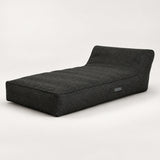
A full-length lounge gives you room to recline, and some designs add a backrest for a more supported position. Consider how you like to rest: do you want to lie nearly flat, or sit back and read? Check whether the shape supports your head and shoulders without forcing you into one posture. If you tend to stay in the water for a while, comfort in your preferred position matters more than a dramatic silhouette.
Consider a hammock float for easier getting on and off
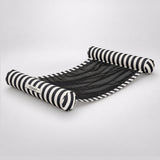
A hammock-style float supports you in a suspended position rather than holding your whole body above the water. That can make it feel less like climbing onto a large platform, though you should still follow the maker’s instructions for getting on and off. Compare the support areas and the float’s overall length with your body. The Poolboy range has three products, each suited to a different way of lounging in the water.
Pick a social float for conversation or group activities
A larger float can give a group room to gather, but it also takes up more space and may be harder to steer around a busy pool. For conversation, check how people are meant to sit and whether the design keeps them facing one another. A shared float is best when its capacity and the pool’s size suit the number of people using it. If you’d rather browse a wider range of pool float styles, compare how each design fits your plans and available space.
Look for a pool chair or saddle when you want to stay upright
A floating chair or saddle keeps your body in a more upright position, which can suit casual conversation or a quick break from swimming. Look closely at the seat shape and any back or arm support; small differences can change how stable and comfortable the float feels. If you prefer to keep your legs in the water, choose a design that allows that position rather than assuming every chair-style float works the same way. For an informal look at different adult lounging styles, this adult float overview may help you compare the basic shapes.
Find a float that fits your body and pool
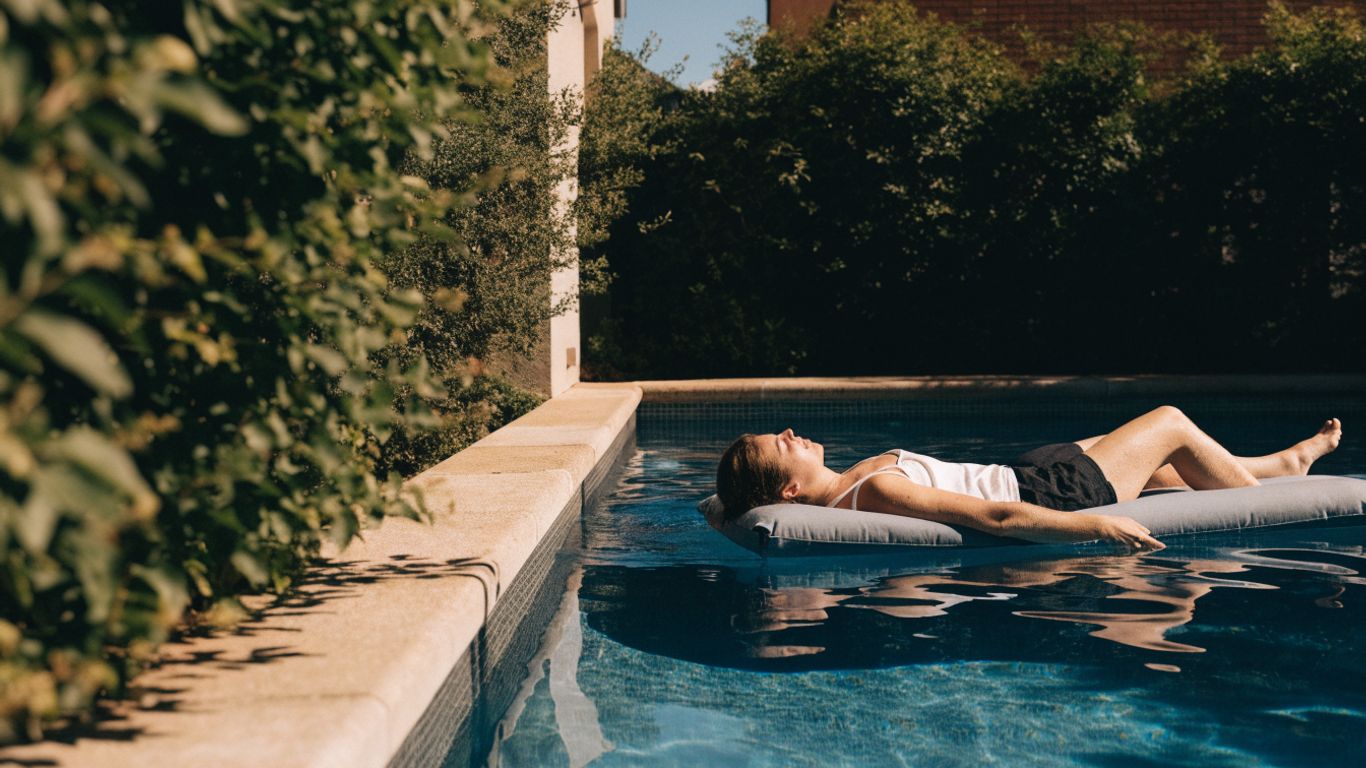
A float can look spacious in a product photo and feel quite different once you’re using it. Check the listed capacity and dimensions, then picture how it will sit in your pool with you on it. Consider whether you want room to stretch out or a compact shape that leaves space for swimming. The image below shows why it helps to consider the person and the pool together, not just the float by itself.
Check weight capacity and recommended user size
Start with the manufacturer’s stated weight capacity and any recommended user size. A float that is within its limit may still feel cramped if the body shape or supported area doesn’t suit you. Check whether the listed capacity applies to one person or multiple users, especially for shared designs. Leave a sensible margin rather than treating the maximum as a comfort target.
Compare dimensions with your height and preferred position
Length and width affect how your body is supported, so compare product dimensions with your own height and the position you prefer. A long lounge may suit someone who wants to stretch out, while a shorter chair-style float can be easier to turn and move. Product dimensions are a useful starting point, but they don’t tell the whole story: look for details about seat depth, back support, and the areas that contact the water. The Poolboy floats are designed for pools and other summer conditions, so choose a style that fits the pool routine you actually have.
Consider how much space the float needs in the water
Think about the float’s footprint as well as the pool’s overall dimensions. A large lounge can drift across a narrow pool, leaving less room for swimmers and making it harder to pass around one another. A quick comparison helps turn “Will it fit?” into a more practical question about how the pool will still be used.
| Pool situation | What to consider | Possible fit |
|---|---|---|
| Narrow pool | Room to move past the float | Compact chair or hammock |
| Small plunge pool | Float length and turning space | Shorter, single-user design |
| Spacious pool | Space for drifting and swimming | Full-length lounge |
| Shared pool | How many people need room | Individual floats or a group design |
Use the table as a prompt rather than a guarantee: the float’s dimensions and the pool layout both matter. If the pool is used for swimming laps or active play, leave a clear area instead of filling the water with oversized loungers.
Think about portability for travel or smaller pools
If you’ll carry your float to a holiday rental or store it in a small cupboard, consider how it packs down and what it weighs. A compact deflated shape may be easier to transport, while a larger design can take more effort to fold and move. Before buying, check the packed dimensions if they’re available and whether an inflation method is included. This floating lounger guide also covers the practical fit between a float, your body, and your storage space.
Compare materials and construction
Materials influence feel, care, and how a float is built. Inflatable vinyl, foam, and fabric-covered designs have different constructions, so compare the product details rather than assuming that one label tells you everything. Pay attention to seams, valves, and any points where sections join. Poolboy is a New Zealand-designed brand whose fabric floats use solution-dyed Olefin and a welded TPU core.
Weigh the benefits of vinyl and other common materials
Inflatable vinyl is often light and can deflate for storage; foam keeps its shape without inflation, while fabric-covered designs vary according to their inner construction. None of those broad categories alone tells you how a particular float will feel or hold up. Look at the materials listed for the specific product and consider how much carrying, drying, and storage you’re willing to do. The material comparison guide offers another way to weigh those trade-offs.
Check seams, valves, and attachment points for durability
The construction details deserve a close look, especially on an inflatable. Check that seams appear even, valves close securely, and handles or other attachment points feel properly integrated. Read the care and use instructions too; a well-made float can still be damaged by rough handling or unsuitable storage. Construction is one part of durability, alongside the way you use and look after the float.
Look for materials that resist sun and chlorine damage
Pool water, sun, and sunscreen can all affect materials over time. Check whether the maker gives care instructions for chlorine exposure and recommends rinsing after use. If the float will be left outside, find out whether it should be kept shaded when not in the water. Material details can guide your choice, but sensible care remains part of keeping any float in good condition.
Decide whether a solid or mesh design suits your needs
A solid surface and a mesh section feel different in the water. Mesh can let water pass through where the body rests, while a solid surface provides a continuous barrier between you and the pool. Consider whether you want to stay mostly out of the water or prefer a cooler, more immersed position. Poolboy’s fabric floats use a welded TPU core beneath solution-dyed Olefin fabric, so check the construction details when comparing materials rather than treating all fabric designs as alike.
Choose comfort and convenience features
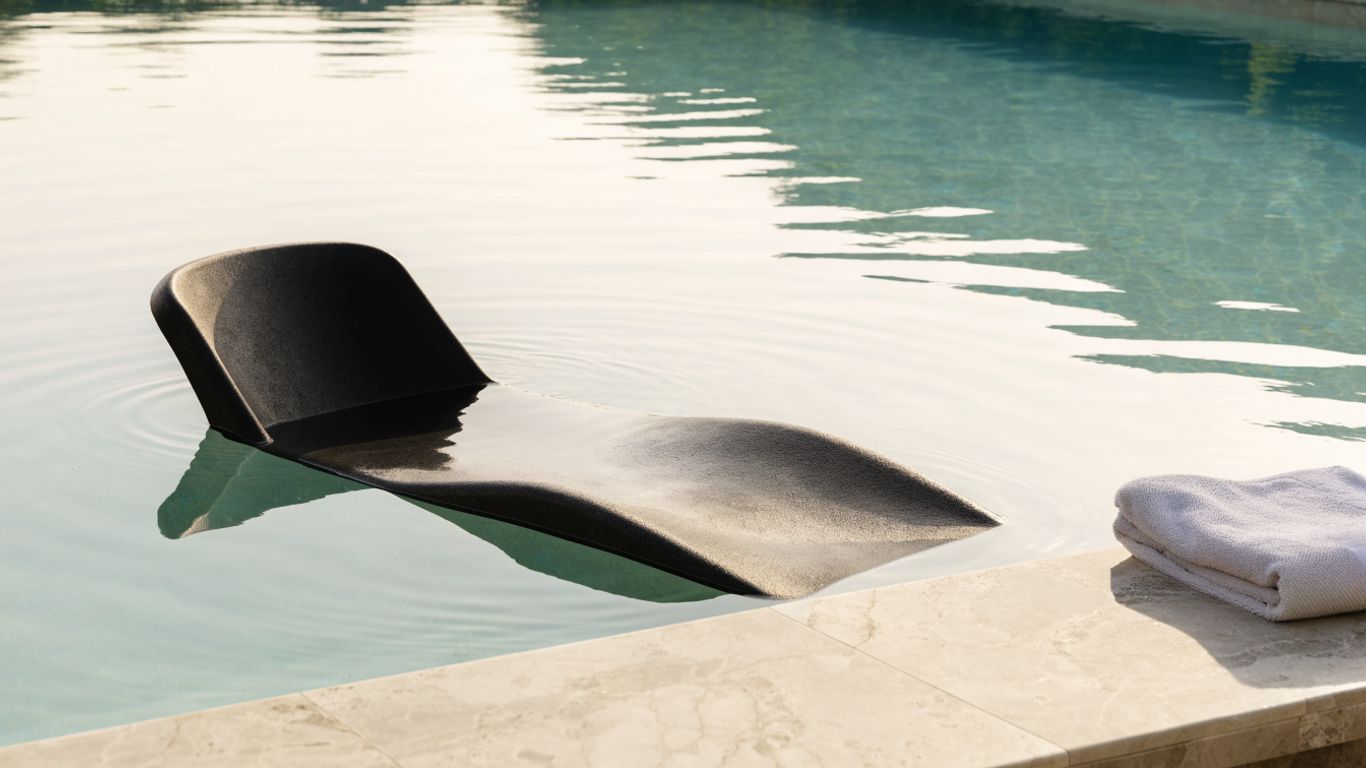
Small features can shape whether a float feels easy to use after the novelty wears off. A headrest, cup holder, or quick-inflate valve may be useful, but only if it suits how you spend time in the pool. Consider what you’ll actually use and what might make the float bulkier to carry or store. The photo below offers a visual reminder to weigh comfort against space and practicality.
Compare headrests, backrests, and arm support
Support features matter most when they match the posture you want. A raised backrest can make a reclined position feel more natural, while arm support may be useful on a floating chair. Check whether the support looks fixed or adjustable, and look for product details about the intended position. If you plan to change positions often, a simpler design may feel less restrictive.
Consider cup holders and storage pockets
Cup holders and pockets are handy only when they’re positioned where you can reach them comfortably. Think about what you’d carry into the pool and whether a pocket is meant for small personal items rather than anything that must stay dry. Extra details can add bulk, so compare them with your priorities. It’s perfectly reasonable to choose a float without them.
Look for quick-inflate valves and included pumps
Inflation instructions can tell you how much setup to expect. Check the valve type, whether a pump is included, and whether the instructions recommend a particular inflation method. Avoid guessing at firmness: overinflating can strain seams, and too little air may affect how the float supports you. Follow the product guidance and take the time to close the valve properly.
Decide whether easy deflation matters for storage
If you’ll put the float away between uses, consider how easily it deflates and folds. A compact packed shape can be useful in a smaller home or when you travel, but make sure the material can be folded as directed. Check that the valve is easy to access and that you have somewhere dry to keep the float. Convenience is a practical feature, not just a detail on the product page.
Use pool floats safely
A pool float is for leisure, not a substitute for swimming ability or active supervision. Read the instructions and use the float in conditions appropriate to its design. Keep an eye on where it drifts, especially near pool fittings or areas used by swimmers. These basics apply whether you’re floating alone or sharing the pool with family and friends.
Follow the manufacturer’s weight and use guidelines
Use the float only within its stated capacity and for the purpose described by the manufacturer. If the instructions limit the number of users or describe a specific way to sit or lie on it, follow that guidance. A float that is overloaded or used in an unintended position may become unstable. If the instructions are missing or unclear, check with the seller or manufacturer before use.
Keep floats away from drains and pool equipment
Keep a safe distance from drains, skimmers, ladders, and other pool equipment. A drifting float can block access or move into an area where it’s awkward to retrieve. Never let an unattended float linger near equipment, and avoid tying it to fittings unless the manufacturer specifically allows it. Clear water around the pool’s working parts makes the space easier to use.
Supervise children around adults using floats
Children need active supervision around the pool, even when adults are using floats nearby. A large float can obstruct your view or make it harder to reach someone quickly. Keep children within close reach and follow the pool’s safety rules rather than assuming a float makes the water safer. Stay attentive instead of treating floating time as a break from watching.
Avoid treating an inflatable float as a life-saving device
An inflatable leisure float is not a personal flotation device. It may move, tip, or deflate, and it is not designed to keep someone safe in an emergency. Use appropriate safety equipment and follow local water-safety guidance. Keep that distinction clear, even in calm water.
Maintain and store your float
A little care after swimming can prevent grime and residue from building up. Follow the manufacturer’s cleaning instructions, allow the float to dry thoroughly, and store it in a suitable place. Check for wear before the next use, especially if it has been packed away for a while. Good habits are straightforward; the less glamorous part is remembering to do them.
Rinse off chlorine, salt, and sunscreen after use
After using the float, rinse it with fresh water if the care instructions allow. This helps remove pool water, salt, and sunscreen residue that can remain on the surface. Use only cleaning products recommended by the manufacturer, since harsh cleaners may not suit every material. A quick rinse is easier before residue has time to dry on.
Dry the float fully before folding it
Let the float dry completely before folding or packing it away. Moisture trapped in folds or between layers can leave an unpleasant smell and may affect the material. Give seams, pockets, and other creases a little extra attention. If the float is still damp, leave it out longer rather than rushing it into storage.
Patch small punctures with a compatible repair kit
For an inflatable float, use a repair kit compatible with its material and follow the instructions carefully. First make sure the area is clean and dry, then check whether the damage is small enough for a simple patch. Don’t assume that every adhesive works with every surface. If the repair seems beyond a minor puncture, ask the manufacturer or seller for advice.
Store it out of direct sunlight and extreme heat
Keep the float somewhere clean and dry, away from direct sunlight and extreme heat when it isn’t being used. Follow the maker’s guidance on whether it should be stored inflated or deflated. Avoid placing heavy objects on top of it or folding it sharply if the instructions advise against that. A calm, protected storage spot is better than leaving it on the pool deck all season.
Conclusion
Choose a float around your preferred position, your body, and the space you have, then check its construction and instructions before buying. With sensible use and a rinse-and-dry routine, your pool float can be ready for the next day in the water.
Frequently Asked Questions
What type of pool float is best for adults?
It depends on how you want to use it. Choose a lounge for stretching out, a hammock for a more suspended position, or a chair-style float if you prefer to sit upright.
How do I choose the right size pool float?
Compare the float’s dimensions and stated user recommendations with your height and preferred position. Also consider how much room it will take up in your pool.
How much weight can an adult pool float hold?
Capacity varies by product, so check the manufacturer’s stated weight limit and user guidance. Do not treat the maximum capacity as a promise of comfort.
Are mesh pool floats cooler than solid floats?
Mesh designs allow water to pass through the sections made from mesh, which can leave you more immersed. A solid surface provides a more continuous barrier between you and the water.
Can you leave a pool float in the sun?
Follow the manufacturer’s care instructions. In general, storing a float out of direct sunlight and extreme heat when not in use helps protect it from unnecessary exposure.
How should you clean and store a pool float?
Rinse it after use if the care instructions allow, let it dry completely, and store it in a clean, dry place. Check the product guidance for any material-specific steps.
Are pool floats safe for children?
A leisure float is not a life-saving device, and it does not replace active adult supervision. Follow the manufacturer’s instructions and your local pool-safety guidance.
