


Floating pool lounger: How to choose the right one for your pool
Key Takeaways
The right floating pool lounger fits your pool, your preferred way to relax, and the time you’re willing to spend on care. Compare the details before you buy, not just the shape or color.
- Choose between inflatable, foam, fabric or mesh, and hybrid designs based on setup and storage.
- Check materials for durability, water exposure, drying time, and maintenance needs.
- Match the lounger’s dimensions and weight capacity to you and your pool.
- Treat handles and cup holders as useful extras, not substitutes for safe use.
- Rinse, dry, store, and inspect your lounger to help keep it in good condition.
Understand the main types of floating pool loungers
Floating loungers vary in how they support you, how quickly you can get them ready, and where you can store them afterward. Some are made for compact packing; others trade portability for a more settled feel in the water. Think about how you actually use your pool, rather than choosing by appearance alone. If you’re weighing several styles, this guide to pool floats and loungers offers another way to compare the options.
Inflatable loungers for easy storage and transport
Inflatable loungers are a practical choice when you need something that can be deflated and put away between uses. Their shape and firmness depend on how much air you add, so check how the lounger feels when inflated as well as how small it packs down. The trade-off is that you need to keep an eye on valves and seams, and make sure the material suits your pool routine.
Foam loungers for quick setup and lasting buoyancy
Foam loungers are ready to use without inflation, which can make them appealing when you’d rather not set up equipment before a swim. They tend to take up more room in storage than a deflated inflatable, so measure your storage space before choosing one. Check the construction and care instructions, too; “foam” alone doesn’t tell you how a particular lounger will hold up over time.
Fabric and mesh loungers for a cooler, more supportive feel
Fabric and mesh loungers can feel different from a fully enclosed inflatable: the fabric touches your skin, and mesh sections may let water pass through. For instance, the Poolboy Sinka-Bit has a quick-drying mesh centre, striped Olefin bolsters, and a welded TPU core. Look at how the support is arranged and whether the lounger’s shape suits the way you prefer to rest.
Hybrid designs that combine floating and reclining features
Hybrid designs bring together elements such as a supportive back and a floating seat, or combine fabric with an internal buoyant structure. They can be a good middle ground if you want more posture support than a simple flat float provides. Check how the lounger sits in the water and whether it offers the recline you expect; product photos don’t always make the angle obvious.
A short demonstration can help you see how a lounger sits and moves in water, but it won’t replace checking dimensions or the manufacturer’s instructions. If possible, think about the pool’s depth and the way you plan to get on and off the float, too.
Choose materials that suit your pool and routine
The material affects how a lounger feels, how you care for it, and how well it suits repeated use in your pool. Check the construction as well as the surface: seams, valves, internal cores, and fabric treatments all influence what to expect. A comparison of float materials can help you sort through the basic differences before you narrow your choices. Consider your pool conditions and storage habits together, since a material that works well in the water still needs appropriate care afterward.
Compare durability, puncture resistance, and UV protection
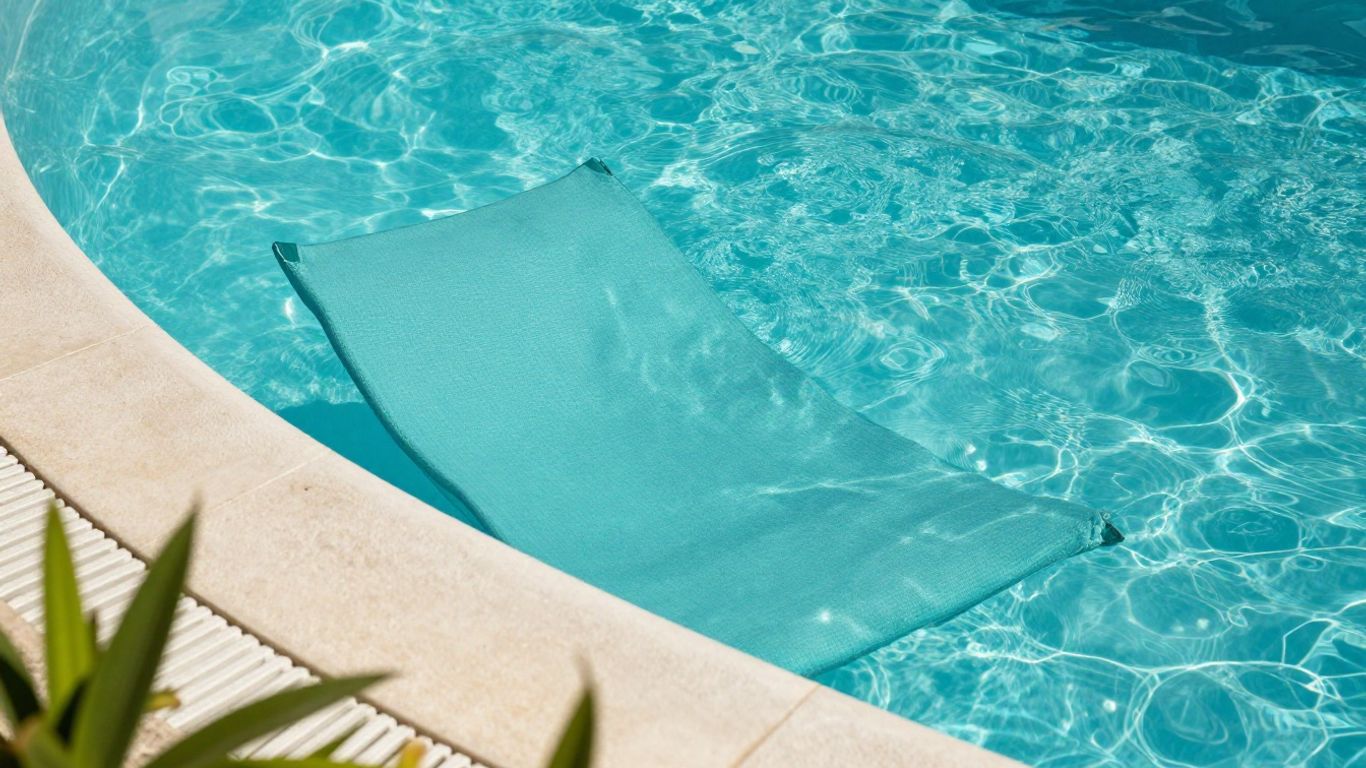
No single material label answers every durability question. Look for specific construction details and care guidance, and check whether the maker describes protection from sun exposure or pool chemicals. The Poolboy Floata-Long, for example, is described as cool-to-touch Olefin fabric over a welded TPU core and as resistant to UV, chlorine, salt, and mould. Those documented details are more useful than a vague promise of toughness.
A simple comparison can help you decide what to investigate further; the categories below are broad tendencies, not guarantees for every product.
| Material or construction | What to check | Practical consideration |
|---|---|---|
| Inflatable construction | Seams, valves, and puncture guidance | Needs inflation and careful handling |
| Foam | Surface and care instructions | Usually stays bulky in storage |
| Fabric over an internal core | Fabric treatment and core construction | Check rinsing and drying guidance |
| Mesh sections | Mesh strength and surrounding support | Water can pass through the open section |
Use the table as a starting point, then confirm the maker’s specifications for the exact lounger you’re considering. A well-chosen material still needs sensible handling, especially around rough surfaces and sharp poolside objects.
Check how materials hold up to chlorine and saltwater
If your lounger will be used in chlorinated or saltwater pools, look for explicit care and resistance information rather than assuming every fabric or coating behaves the same way. Rinsing after use is a useful habit, but it doesn’t replace the manufacturer’s guidance. If your pool has unusual water-treatment conditions, check whether the product information addresses them or ask the seller before buying.
Look for fabrics that dry quickly and resist mildew
Fabric loungers need time to dry before you fold or store them. Check whether the product information describes water-shedding or quick-drying materials, and follow its instructions for airing the lounger out. A mesh panel can change how water drains, but the full item—including seams and any internal structure—still needs to dry properly.
Balance premium finishes with ease of maintenance
A refined finish may feel comfortable and look at home beside the pool, but it should also fit your day-to-day routine. Ask how to rinse, dry, and store the lounger, and whether its care instructions are realistic for you. Choosing a finish you can maintain is more useful than buying one you’ll be reluctant to use.
Find a comfortable fit for your body and pool
A lounger can look generous in a product photo and still feel awkward once you’re on it. Compare its actual dimensions with your height, the position you like to rest in, and the available space in your pool. You can also consider whether a full-length shape, a more upright seat, or a smaller float better suits your routine. A pool lounger buying guide can help you compare in-water and poolside options as you work out what fits.
Match the lounger’s dimensions to your height and weight
Check the listed length and width against your body, not just against the overall appearance of the float. If you prefer to stretch out, a shorter design may not feel comfortable even if it supports your weight. Consider how the lounger’s width affects your movement, too, especially if you share a smaller pool with other swimmers.
Consider seat depth, back support, and reclining position
Think about where you want your weight to rest: a flatter float, a raised back, or a seat that keeps more of you in the water can each feel quite different. If possible, look for images or demonstrations that show the lounger in use, rather than only from above. Choose support that feels natural for the amount of time you plan to spend on the float.
Choose a shape that fits your pool’s size and layout
A long lounger may suit a spacious pool but take up too much room in a compact one. Leave space for swimmers to pass, and consider how the float moves when the water is disturbed. For a calmer fit, pay attention to where the lounger tends to drift and whether its shape makes it easy to turn or reposition.
Check the recommended weight capacity before buying
Always compare your weight with the manufacturer’s stated capacity, and follow any guidance about the number of users. Weight capacity is not the only measure of comfort, but it is a basic suitability check. If the information is missing or unclear, get an answer from the seller before using the lounger.
Evaluate features that affect everyday use
Small details can make a lounger easier to use, but they matter most when they fit your habits. Think about where you’ll keep a drink, how you’ll move the float, and what setup it needs. Look for clear product information on valves, accessories, and storage rather than assuming similar-looking designs work the same way. A useful feature should make your routine simpler, not add a new chore.
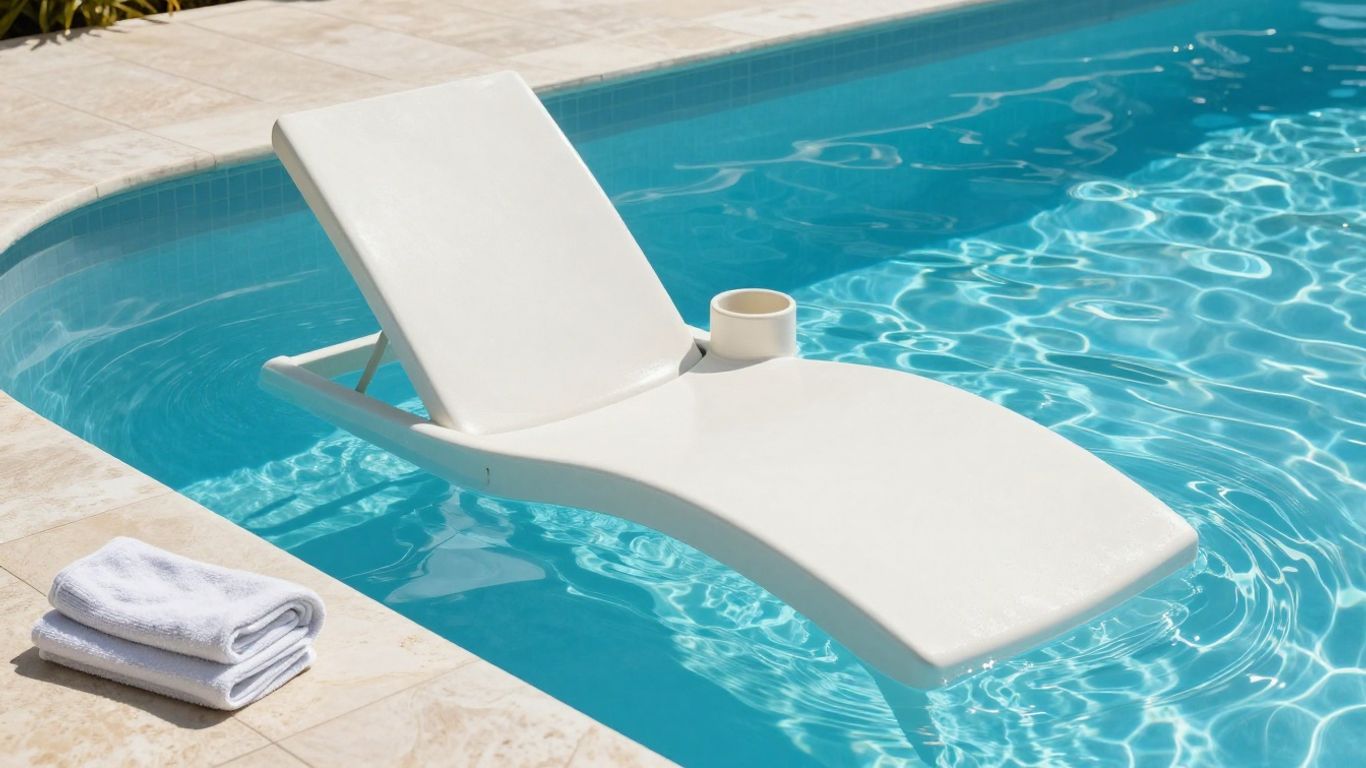
Look for cup holders, headrests, and storage pockets
Cup holders and headrests can be handy if they’re positioned where you can reach them comfortably. Storage pockets may add convenience, but consider whether you need one and how it affects the lounger’s shape in use. Prioritize the support and dimensions first; accessories are secondary if the float itself doesn’t suit you.
Decide whether handles or anchor points are useful
Handles may make it easier to reposition or carry a lounger, while anchor points can be useful in some pool settings. Check what each feature is designed for and whether the manufacturer gives instructions for its use. Don’t tie a lounger to pool equipment or assume an attachment point can withstand any load.
A quick way to judge extras is to connect each one to a real part of your routine:
- Choose a cup holder if you’ll use it and can reach it from your preferred position.
- Look for handles if you often carry or reposition the lounger.
- Consider an anchor point only if its intended use is clearly explained.
- Skip add-ons that make storage or cleaning more complicated than necessary.
This keeps the decision grounded in use rather than in the number of features listed on a product page. A simpler design may be the better fit if it’s easier to handle and care for.
Check inflation valves and pump compatibility
For an inflatable lounger, check whether a pump is included, what type of valve it uses, and whether the maker gives inflation instructions. Don’t overinflate to make a float feel firmer; use the recommended setup. If the lounger uses a pump, confirm that the pump and valve are compatible before you rely on it for a pool day.
Consider how easily the lounger folds, deflates, or stacks
Storage can be the deciding factor when your pool gear shares space with other equipment. Inflatable designs can be deflated, while foam or rigid forms may need a dedicated spot; fabric loungers may have their own packing instructions. Check the packed size or storage guidance before buying, and allow the lounger to dry fully first.
Use a floating pool lounger safely
A lounger is for relaxing, not for preventing a person from drowning. Read the manufacturer’s instructions and follow age, weight, and use guidance every time. Keep the float clear of pool equipment and make sure everyone using it understands its limits. Conditions can change quickly, so stay alert to the people and movement around you.
Follow the manufacturer’s age and weight guidance
Check any stated age limits and weight capacity before someone gets on the lounger. Follow instructions about how many people it can hold and how it should be used. If a product is intended for adults, don’t treat it as suitable for a child just because it appears stable.
Keep loungers away from drains and pool equipment
Keep floats clear of drains, returns, skimmers, and other pool equipment. A loose lounger can drift, and equipment should remain accessible and unobstructed. Move the float if it begins to collect near an inlet or interferes with normal pool use.
Supervise children and avoid treating a lounger as a flotation device
Children need active adult supervision around water, whether they’re on a lounger or not. A pool float is not a life-saving device and should not be relied on as a substitute for swimming ability, supervision, or appropriate safety equipment. Keep the pool’s safety rules in place even during relaxed, casual use.
Account for wind, currents, and crowded pool conditions
Wind and water movement can carry a lounger farther than you expect, while a crowded pool leaves less room to maneuver. Stay within easy reach of your float and bring it out of the water when conditions make it difficult to control. In a small or busy pool, one lounger may be enough.
Clean and store your lounger to extend its life
A little care after swimming can help keep a lounger ready for its next use. Follow the product’s specific cleaning instructions, since materials and construction differ. In general, rinse off pool residue, allow the whole item to dry, and store it in a place where it won’t be damaged. Regular checks are easy to overlook until the first warm day arrives.
Rinse off chlorine, salt, and sunscreen after use
Rinse the lounger with fresh water after use, particularly if it has been in chlorinated or saltwater. Sunscreen and other residue can remain on the surface, so follow any cleaning advice from the manufacturer. Avoid harsh cleaners unless the instructions say they’re suitable for the material.
Dry it fully before folding or packing
Let the lounger dry completely, including seams, folds, and mesh sections, before packing it away. If it’s still damp, give it more time in a shaded, ventilated place. Folding it wet can leave moisture trapped where air doesn’t circulate well.
Store it away from direct sunlight and sharp objects
Choose a clean, dry storage spot away from sharp edges and anything that could snag or puncture the material. Follow any advice about whether the lounger should be folded, deflated, or kept flat. Keeping it out of unnecessary sun between uses can also reduce exposure when it isn’t in the pool.
Inspect seams, valves, and straps before each season
Before the season starts, check seams, valves, straps, and attachment points for wear or damage. Inflate the lounger according to its instructions if a check requires it, and don’t use it if you find a fault that could affect safe use. Repair only as directed by the manufacturer; otherwise, ask the seller what to do next.
Conclusion
The best floating pool lounger is the one that fits your body, pool, and habits without making care or storage a nuisance. Compare construction and dimensions, follow the maker’s safety guidance, and keep up with simple rinsing, drying, and inspection so you can enjoy it with fewer surprises.
Frequently Asked Questions
What type of floating pool lounger is easiest to store?
Inflatable loungers can be deflated for storage, which may suit you if space is limited. Check the packed dimensions and setup instructions before choosing one.
Are fabric pool loungers comfortable?
Comfort depends on the lounger’s shape, support, and material, as well as your preferred position. Check its dimensions and look for images or demonstrations that show how it sits in the water.
How do I choose the right size lounger?
Compare the listed length and width with your height, preferred lounging position, and available pool space. Also check the manufacturer’s weight guidance before buying.
Can I use a pool lounger in saltwater?
It depends on the product and its materials. Check the manufacturer’s care and resistance information, and rinse the lounger after use if its instructions recommend doing so.
How often should I clean a floating pool lounger?
Follow the manufacturer’s care instructions and rinse off residue after use as appropriate for the material. Let the lounger dry fully before you store it.
Is a pool lounger a flotation device?
No. A pool lounger is for relaxing and should not be treated as a life-saving device or a substitute for supervision and appropriate safety equipment.
Can I leave a pool lounger in the water?
Follow the product’s instructions rather than assuming it can stay in the pool between uses. Removing, rinsing, and drying it as directed can help you care for it properly.