


How to buy pool loungers online: A complete guide to choosing the right fit
Key Takeaways
A good pool lounger fits your pool, your storage space, and the way you actually relax. Compare its intended use and construction before you make a purchase.
- Choose between an in-water lounger, a shallow-ledge design, and a poolside chaise.
- Check materials, finishes, and care instructions against your pool conditions.
- Measure the lounger and the route it must take to reach its spot.
- Compare comfort features and confirm whether a design is made for in-water use.
- Read seller terms carefully, including delivery, returns, warranty, and replacement parts.
Choose the right type of pool lounger
Start with where you want to relax: in the pool, on a tanning ledge, or beside the water. Those locations call for different shapes and materials, so a photo that looks right in a listing is only part of the decision. When you buy pool loungers online, first match the design to your pool and your routine.
Compare in-pool, ledge, and poolside designs
An in-pool lounger is designed to float or sit in the water, while a ledge lounger is made for a shallow shelf in the pool. A poolside chaise, by contrast, is a piece of outdoor furniture that stays on a deck or patio. The Floata-Long is a fabric lounger designed for use on or beside the water; at 160 cm long, it offers room for one person to lie flat.
If you are weighing the different ways to lounge, the Floata-Round is designed for upright seating, with a recessed seat and a bolster ring. Its shape keeps a drink within reach, a small but useful distinction from a full-length float.
A product video can help you understand the shape and scale, but it cannot tell you whether a lounger will fit your pool. Use it as a visual reference, then check the dimensions and intended placement in the listing.
Match the lounger to your pool’s layout
Look at the pool’s depth changes, steps, shelves, and open water before settling on a type. A shallow ledge may suit a stationary lounger, while a floating design needs enough room to drift without bumping into steps or other swimmers. For a poolside chaise, check where the legs will sit and whether the deck leaves a clear path to the water.
Consider who will use it and how often
Think about the people who will use the lounger, how they prefer to sit or lie, and whether it will be shared. A design for quiet, full-length lounging may not suit someone who prefers to sit upright or stay partly in the water. The Sinka-Bit is a floating hammock designed to let you sit half in and half out of the water, so it serves a different kind of pool break.
Check materials and weather resistance
Sun, pool chemicals, and regular wetting can all affect outdoor materials over time. Product pages should clearly identify the frame, fabric, and finish rather than relying on broad phrases such as “weather-ready.” Compare the stated care requirements with how you plan to use and store the lounger. Look for details that describe the actual materials and construction.
Compare frames made from aluminum, resin, and steel
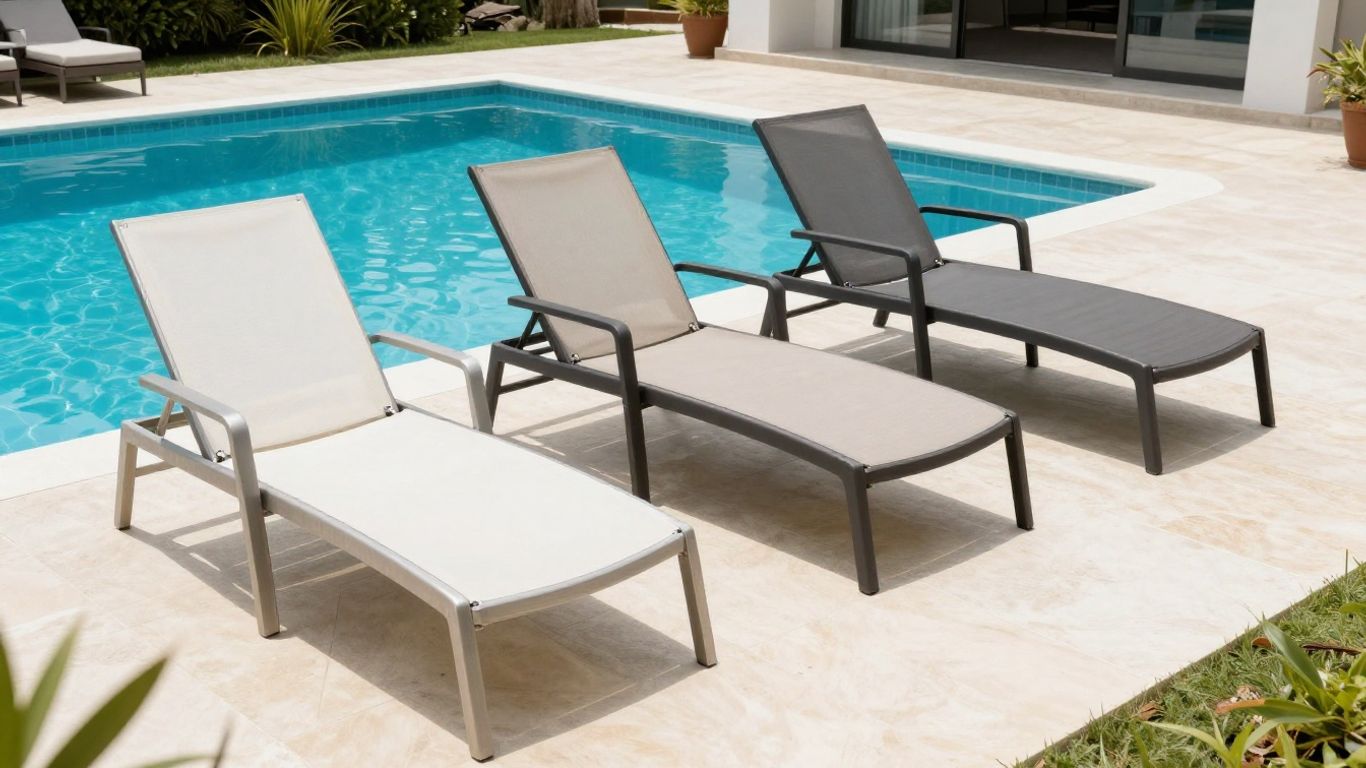
Frame material can influence weight, upkeep, and how a lounger handles outdoor conditions. The table below is a starting point for comparing common options; the finish and product construction matter as much as the material name.
| Frame material | What to check | Questions to ask |
|---|---|---|
| Aluminum | Frame finish and stated care | Is the finish suitable for your poolside conditions? |
| Resin | Product construction and care instructions | Is the item intended for in-water or poolside use? |
| Steel | Protective coating and maintenance guidance | What steps help protect the frame from corrosion? |
Use the seller’s specifications to confirm what applies to the exact model. A material label alone does not establish how a particular finish will perform in your setting.
Choose fabrics and finishes suited to sun and water
For fabric loungers, check what the fabric is made from, how it is attached, and whether the listing describes resistance to sun, chlorine, or salt. The product pages for Poolboy floats specify solution-dyed Olefin fabric over a welded TPU core, with resistance to UV, chlorine, salt, mould, and mildew described for the range. Those details give you something concrete to compare with the conditions around your own pool.
Look for corrosion resistance and UV protection
Find the specific wording about corrosion protection and UV resistance rather than assuming every outdoor finish provides both. Check whether the seller gives cleaning or rinsing instructions, too. Clear care instructions make it easier to judge whether the lounger fits the maintenance routine you are willing to keep.
Measure for fit and placement
A lounger can look compact online and still take up more space than expected once it arrives. Check the product’s full dimensions, weight, and capacity before ordering, then map out where it will sit or float. Consider how it will be moved into place and where you will keep it when it is not in use.
Check the lounger’s dimensions and weight capacity
Compare the listed length, width, and height with the space available and the person who will use it. For a floating design, also consider its shape in the water and how much room it may need to move comfortably. Confirm the stated weight capacity rather than estimating it from a product photograph.
Measure steps, gates, and storage areas for delivery access
Measure the route from your delivery point to the pool, along with any narrow gates, steps, or storage doors. This is especially useful for bulky, assembled furniture, which may be harder to maneuver than its dimensions suggest. Before ordering, check these three points:
- The narrowest gate or passage on the route.
- Any turns or steps between the delivery point and pool area.
- The storage space available when the lounger is out of use.
Keep those measurements beside the product dimensions while you shop. If the seller gives package dimensions, compare those as well; an item that fits the space may still be difficult to carry through the access route.
Leave enough room for walkways and pool entry
Plan for the space people need to walk around the lounger and enter or exit the pool safely. Avoid placing a poolside chaise where it blocks steps, a gate, or a frequently used path. In the water, leave room for swimmers to move around the lounger rather than treating its footprint as the only space it needs.
Assess comfort and useful features
Comfort is personal, but product details can help you narrow down what is likely to work. Consider how you prefer to recline, whether you want a cushion or an open fabric surface, and how much moving the lounger will involve. Then make sure the design is intended for the location you have in mind.
Compare adjustable positions and ergonomic support
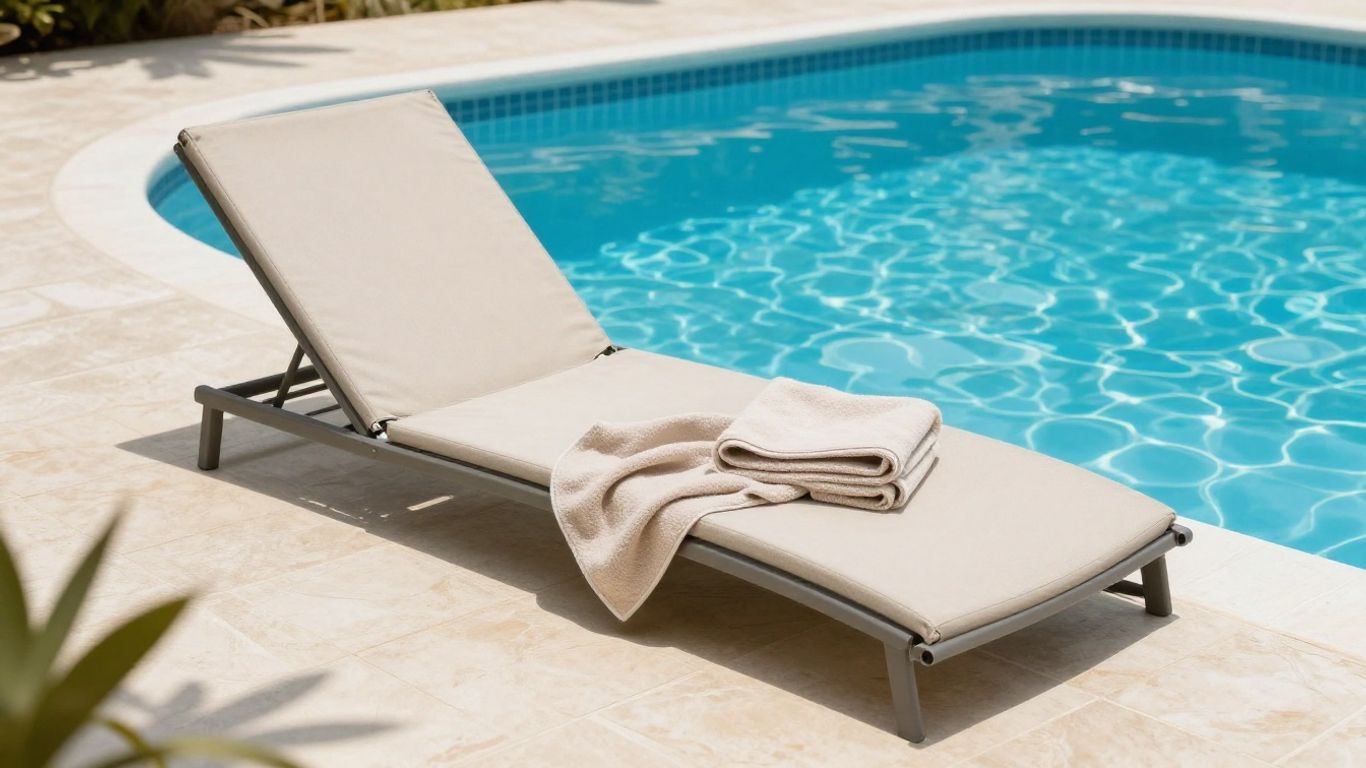
A reclining back can give you more than one way to sit or lie down, while a fixed shape may be simpler to use. Check how many positions are listed and whether the seller provides views of the lounger in each one. Look for clear information on back support, seat shape, and any raised sections rather than relying on a vague comfort claim.
Decide whether cushions, wheels, or arms matter
Features are useful when they match your routine, not just because they appear on a specification list. If you expect to move a poolside chaise often, wheels may matter; if you plan to read or sit upright, arms or a supportive back may be more relevant. For a quick comparison, consider which of these would change how you use the lounger:
- A cushion for added padding.
- Wheels for moving a poolside chaise.
- Arms or a raised back for sitting up.
Skip features you will not use, especially if they add storage or care requirements. A simpler lounger can be the better fit when your priority is an easy setup and a clear place to rest.
Check whether the lounger is designed for in-water use
Do not assume a poolside chair can be placed in the pool, or that every float is suited to a shallow ledge. Look for explicit wording about where the product is intended to be used, and check any restrictions from the seller. If the listing does not make that clear, ask before you buy rather than guessing from the product photo.
Compare online sellers before buying
When you shop online, the listing and the seller’s terms are part of the product decision. Read beyond the headline and look for dimensions, materials, care guidance, and clear images of the item from different angles. A pool lounge chair guide can offer another set of comparison criteria, but confirm the details for the specific lounger you are considering.
Review product details, photos, and customer feedback
Compare the written specifications with the photos, and note anything the seller has not explained. Customer feedback can add useful context about assembly, scale, or everyday use, but read several reviews rather than treating one experience as typical. Before you decide, check whether the listing makes these basics easy to find:
- Full dimensions and stated weight capacity.
- Materials, intended placement, and care instructions.
- Clear photos of the design and its key features.
If important information is missing, ask the seller for it. A careful comparison now is easier than discovering after delivery that a key detail was never clear.
Check shipping costs, delivery timelines, and return policies
Delivery terms can affect both the total cost and the practicality of the purchase. Confirm whether shipping is included, when the item is expected to arrive, and whether delivery is to your door or another location. Read the return policy closely, including the condition and packaging required if the lounger does not suit your space.
Confirm warranty coverage and replacement-part availability
Find out what the warranty covers, how long it lasts, and what steps you must take to make a claim. For furniture with replaceable parts, check whether those parts can be ordered and whether the seller identifies them clearly. Keep the receipt and product information in case you need them later.
Set a budget and compare long-term value
The lowest listed price is only one part of the decision. A lounger’s materials, care needs, delivery cost, and likely storage routine all affect its value over time. Compare the complete purchase rather than a sale price in isolation, and avoid paying for features you will not use.
Weigh upfront cost against materials and expected lifespan
Compare products with similar intended use, size, and construction before judging price. Look for specific material and warranty information, and be cautious about treating a broad durability claim as a guarantee of a particular lifespan. A more expensive option may be worth considering if its construction and care requirements better suit your conditions, but check the details rather than relying on price as a shortcut.
Compare care requirements and seasonal storage needs
A lounger that can be rinsed and stored easily may suit your routine better than one that needs more involved upkeep. Check whether the seller recommends covering, drying, or storing the product indoors during the off-season. Make sure you have a realistic place to store it, especially if it needs to remain dry or take up substantial space.
Look for discounts without overlooking quality details
A discount is useful when the lounger still meets your requirements for fit, use, construction, and seller support. Before checking out, compare the final price with delivery costs and review the return and warranty terms one last time. That simple pass helps you focus on value rather than the size of the markdown.
Conclusion
The right pool lounger is the one that suits your pool layout, fits your available space, and matches the way you relax. Check materials, care, delivery, and seller terms alongside comfort features, and you can make a more confident choice without relying on a product photo alone.
Frequently Asked Questions
What should you check before buying a pool lounger online?
Check the dimensions, weight capacity, intended use, materials, care instructions, shipping cost, delivery timing, return policy, and warranty. Confirm that the lounger will fit both the pool area and the route to it.
Can you use a poolside chaise in the water?
Not unless the seller explicitly says the design is intended for in-water use. Poolside furniture and water loungers are made for different placements, so confirm the product’s stated use before putting it in the pool.
How do you choose between a floating lounger and a poolside chaise?
Choose based on where you want to rest. A floating lounger is for the water, while a poolside chaise stays on a deck or patio; a ledge design is intended for a shallow shelf in the pool.
Which materials are suitable for poolside loungers?
Suitability depends on the material, finish, construction, and your pool conditions. Review the seller’s information about sun and water exposure, corrosion protection, and care rather than relying on the material name alone.
How much space should you leave around a pool lounger?
Leave enough room for people to walk around it and reach pool steps or entry points without obstruction. In the water, account for swimmers moving around the lounger as well as its physical footprint.
What should you look for in a pool lounger return policy?
Check the return window, condition requirements, original packaging rules, and who pays return shipping. Make sure you understand how to start a return before placing the order.
How can you compare the long-term value of pool loungers?
Compare the full price, materials, warranty, care requirements, and storage needs. A lower initial price may not be the best fit if the lounger is difficult to maintain or unsuitable for where you plan to use it.