


Pool float materials: A practical guide to choosing the right option
Key Takeaways
The right pool float material depends on how you want it to feel, where you’ll use it, and how you’ll store it. Look beyond the surface and check the construction, care instructions, and weight guidance too.
- Inflatable and foam floats differ in feel, portability, and the kind of support they provide.
- Fabric surfaces can feel different from bare inflatable material, but construction still matters.
- Sun, pool chemicals, salt water, and rough handling can affect a float over time.
- Choose a design that suits your usual activity, storage space, and intended users.
- A pool float is for recreation, not a substitute for swimming ability or safety equipment.
How pool float materials affect comfort and performance
Material influences more than how a float looks. It affects how the float supports you, how it feels against your skin, and how much effort it takes to carry or store. Think about your usual pool routine before settling on a material; the most comfortable option is the one that fits how you actually use it.
Buoyancy, support, and stability
A float’s support comes from both its material and its shape. Inflatable designs rely on air chambers, while foam models get their buoyancy from the foam itself; in either case, width, thickness, and the way the float holds your weight affect how steady it feels. For upright lounging, a shaped seat may feel more secure than a flat surface, while a broad mat may suit lying back.
Softness and feel against the skin
The surface is what you notice first, especially when you’re lying on a float in direct sun. Bare inflatable material can feel smooth but may become warm or tacky in hot conditions, while fabric surfaces offer a textile feel. If you’re comparing surfaces, this Olefin and PVC comparison offers another look at how their feel and construction differ.
Portability, storage, and drying time
An inflatable can be deflated to take up less space, but it needs to be pumped up again when you want to use it. Foam floats are usually ready to go, though their shape can make them less convenient to pack away. Fabric-covered designs vary: consider how quickly the surface dries and whether you have somewhere to store the float fully dry.
Common materials used in pool floats
Pool floats commonly use air-filled synthetic materials, foam, textile surfaces, or combinations of these. Each construction has its own trade-offs, so a material name alone won’t tell you everything about comfort or durability. Check what makes up both the outer surface and the part that provides buoyancy.
PVC and vinyl for inflatable designs
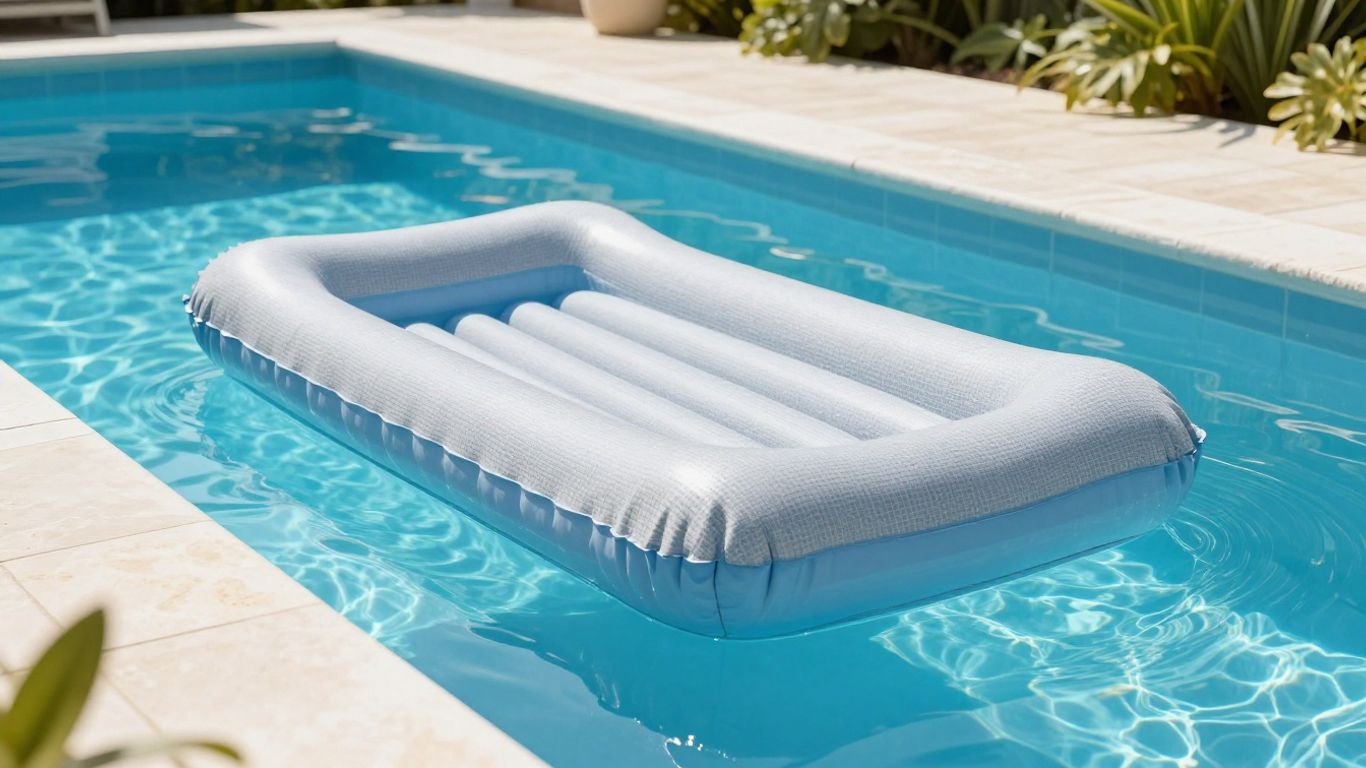
PVC and vinyl are widely used in inflatable floats because they can form flexible, air-holding chambers. Their practical advantages include deflating for storage and offering many shapes and styles. The feel and lifespan can vary with thickness, seams, use, and exposure, so check the specific product rather than assuming every inflatable performs the same way.
A float may also combine an air chamber with a separate outer layer. That makes it useful to understand the materials used for custom floats, while remembering that individual products can use different constructions.
Polyethylene and other closed-cell foams
Closed-cell foam provides buoyancy without needing an air chamber. It can be comfortable to lean on and won’t deflate from a puncture, but a foam float may take up more room when you’re not using it. The firmness and feel depend on the type and thickness of the foam, so try to judge the whole design rather than the material label alone.
Fabric covers and textile surfaces
A textile outer layer changes the feel of an inflatable and can make contact more comfortable than a bare air chamber. Fabric types and construction vary, as do their drying and care needs. For example, Poolboy’s Floata-Round uses solution-dyed Olefin fabric over a welded TPU core, with a recessed seat within a bolster ring for upright sitting.
Mixed-material constructions
Many floats combine materials to balance surface feel, shape, and buoyancy. A cover may sit over an inflatable core, or a mesh panel may be paired with buoyant sections. These combinations can suit particular ways of lounging, but check how the layers are joined and what the care instructions say before choosing one.
Compare the strengths and trade-offs of each material
No material is best in every situation. Durability depends on construction and care as much as the material itself, and comfort is personal. Use the comparison below as a starting point, then check the product’s stated use, weight limit, and care instructions.
Durability against punctures, tears, and wear
Inflatable designs can be punctured, and their seams and valves are points worth inspecting. Foam avoids air leaks, but can still be damaged by cuts, compression, or rough handling. Fabric surfaces may help change the feel of a float, but the cover and inner structure each have their own wear points. Construction details matter as much as the material category when you’re estimating how a float will hold up.
Resistance to sun, chlorine, and salt water
Repeated sun exposure can fade or weaken some materials, while pool chemicals and salt water can affect surfaces over time. Products differ, so avoid treating a broad material category as a guarantee of resistance. Rinsing after use, drying fully, and following the maker’s care instructions are sensible habits whatever the float is made from.
Weight capacity and intended use
Material alone doesn’t determine how much weight a float can support. The design, dimensions, seams, and air chambers all play a part, so use the stated capacity for the specific product. This quick comparison can help you narrow down what to examine before buying.
| Material or construction | Potential advantage | Trade-off to consider |
|---|---|---|
| Inflatable PVC or vinyl | Deflates for compact storage | Can be punctured or lose air |
| Closed-cell foam | Buoyancy without inflation | Can be bulky to store |
| Fabric over an inflatable core | Textile feel with an air-filled structure | Cover and core both need care |
| Mixed-material design | Can combine distinct surface and support qualities | More construction details to check |
Use the table to frame questions, not to make assumptions about every product in a category. A well-made design suited to your intended use may be a better fit than a material that sounds appealing on its own.
Price, lifespan, and overall value
A lower upfront price may suit occasional use, while a more involved construction may appeal if you expect to use a float often and can care for it properly. Compare warranty terms, repair options, and care requirements alongside the purchase price. Value comes down to what you need and how long the float remains comfortable and usable for you.
Match the material to how you plan to use the float
Start with what you want to do on the water, then work back to material and construction. A float for quiet lounging has different priorities from one you carry to another pool or share among several people. Shape and stability matter, too, so material is only one part of the decision.
Relaxing in the pool or lounging in the sun
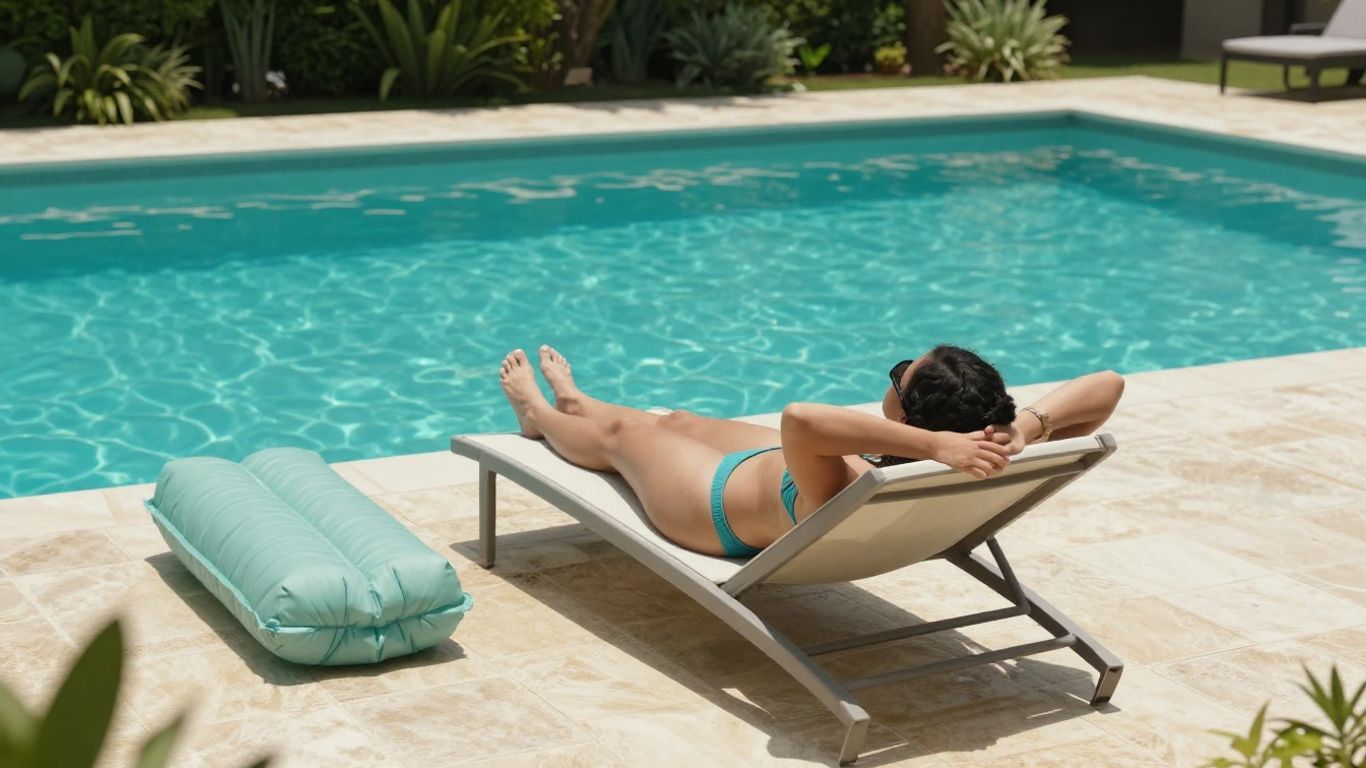
For longer stretches of lounging, consider the surface against your skin, the available support, and whether you want to lie flat or sit upright. A full-length design may suit lying back, while a shaped seat can keep you more upright. Poolboy’s Floata-Long is made with solution-dyed Olefin fabric over a welded TPU core and measures 160 × 88 × 45 cm; its stated design is for one person lying flat.
Playing, swimming, and active use
Active use puts different demands on a float than quiet lounging. Think about how easy it is to grip, move, and get on or off, and whether the design leaves you free to move in the water. Poolboy’s Sinka-Bit has a mesh centre that lets you float half in and half out of the water, with Olefin bolsters at the head and feet.
Travel, compact storage, and frequent transport
If you’ll carry a float between home, the pool, and trips away, storage size and setup become practical deciding factors. An inflatable that deflates may fit more easily into limited space, but remember to account for inflation time and a way to dry it before packing. Before buying, it helps to check a few ordinary details:
- How much space does the float take up when stored?
- Does it need a pump, and is one included?
- Can you dry it fully before packing it away?
- Will its shape be manageable to carry?
These questions are especially useful if you have limited storage or expect to move the float often. A convenient packed size won’t help much if the product is awkward to dry or set up for the way you use it.
Choosing floats for children or shared use
For children or shared use, look for clear age guidance and a stated weight limit, then choose a shape that suits the intended user. A float designed for one person may not be appropriate for several people, even if it looks spacious. Adult supervision and safe water habits matter regardless of material or buoyancy.
Check safety and construction details before buying
A float’s appearance can make it tempting to choose quickly, but small construction details affect how it feels and how you use it. Read the product information and inspect the parts that hold air or join different materials. If you’re buying for a child or a shared pool, be especially clear about who the float is intended for.
Look for clear weight limits and age guidance
Use the product’s own weight limit and age recommendations, not a guess based on its size. If the details are missing or unclear, ask the seller before you buy. A comfortable fit and appropriate capacity are more useful than simply choosing the largest float available.
Inspect seams, valves, and bonded areas
On an inflatable, examine seams and the area around the valve for signs of weak or uneven construction. If a cover sits over an air chamber, look at how the layers are attached and whether the valve is easy to reach. Follow the maker’s instructions for inflation; adding more air than recommended can put unnecessary strain on the construction.
Consider grip, stability, and ease of getting on and off
Think about how you’ll climb onto the float and whether the shape gives you a stable place to sit or rest. Smooth surfaces and rounded edges may be comfortable, but they can also affect grip when wet. For children, inexperienced swimmers, or anyone who may find getting on and off difficult, choose a design that suits their abilities and keep them closely supervised.
Understand the limits of floats as safety equipment
A pool float is a recreational product, not a life-saving device or a substitute for swimming skills. It can shift, tip, or move away from the person using it. Stay attentive around water, follow age and use guidance, and use appropriate safety equipment where needed.
Care for pool floats to extend their lifespan
Simple care can help keep a float pleasant to use and ready for the next swim. Water, sunscreen, salt, and pool chemicals may remain on the surface after a day outside. A little attention before storage is easier than dealing with a damp, dirty float later.
Rinse away chlorine, salt, and sunscreen
After use, rinse the float with fresh water to remove residue from pool chemicals, salt, and sunscreen. Pay attention to areas where water or product can collect, including seams and fabric folds. This quick step is a sensible part of regular care, though it doesn’t replace the specific instructions supplied with the float.
Dry fully before folding or storing
Let the float dry fully before you fold or store it, including any covered or layered sections. Storing it damp can lead to unwanted odours and mildew. For fabric-covered designs, check both the outer surface and any tucked-away areas rather than judging dryness by the top alone.
Protect materials from prolonged sun exposure
Leaving a float in direct sun for long periods can contribute to fading and wear. When you’re finished using it, move it out of strong sun if practical and store it in a dry place. A shade break between swims can help, too; the pool doesn’t need another permanent fixture.
Repair small punctures and follow product care instructions
If an inflatable develops a small puncture, check whether the maker provides repair guidance or a suitable repair kit. Don’t assume that every patch or adhesive works with every material. For a straightforward storage routine, this pool float care and storage guide recommends rinsing, drying, and storing the float deflated and dry.
Conclusion
Choosing among pool float materials is easier when you start with how you’ll use the float, then weigh feel, support, storage, and care together. Check the specific construction, limits, and instructions before buying, and take a moment to rinse and dry the float after use. The best fit is the one that suits your pool days and the space you have to look after it.
Frequently Asked Questions
What material is best for a pool float?
There isn’t one best material for everyone. Consider the float’s surface, support, storage needs, construction, and how often you expect to use it.
Are foam pool floats better than inflatable ones?
Foam floats don’t rely on air chambers, while inflatables can be deflated for storage. Your preference depends on whether you value ready-to-use buoyancy or a more compact stored shape.
Do fabric-covered pool floats dry quickly?
Drying time depends on the fabric, construction, and conditions. Follow the maker’s care instructions and make sure the float is fully dry before storing it.
Can pool floats be used in salt water?
Some products are intended for use in salt water, but you should check the specific product guidance. Rinsing with fresh water after use is a sensible care step.
How do I know what weight a pool float can hold?
Check the product’s stated weight limit and intended use. Don’t infer capacity from appearance or assume that a float designed for one person can safely hold more.
How should I store an inflatable pool float?
Rinse it, let it dry completely, and follow the manufacturer’s storage instructions. If those instructions allow it, deflate the float before storing it in a dry place.
Are pool floats safety devices for children?
No. Recreational pool floats are not a substitute for supervision, swimming ability, or appropriate safety equipment. Follow age guidance and keep children closely supervised around water.