


Olefin fabric pool float: benefits, care, and buying tips
Key Takeaways
An olefin fabric pool float pairs a woven synthetic cover with a buoyant inner construction. The right choice depends on how you lounge, how the float is built, and whether you can rinse and dry it between uses.
- Olefin is a synthetic fiber valued for its low moisture absorption and outdoor use.
- Fabric-covered floats and inflatable designs differ in feel, construction, and storage needs.
- Check the float’s dimensions, weight limit, seams, and flotation core before buying.
- Rinse off pool chemicals and sunscreen, then let the float dry fully before storage.
- A pool float is for comfort, not a substitute for swimming ability or supervision.
What an olefin fabric pool float is
An olefin fabric pool float has an outer cover made from olefin fiber and an inner structure that provides buoyancy. The term describes the cover material, not a single float shape or core design. You might find it on a lounge-style float, a seat, or another form made for relaxing in the water. Looking at both the fabric and what sits beneath it gives you a clearer picture of how the float will feel and function.
How olefin fiber is made
Olefin is a synthetic fiber made from polyolefin polymers, commonly polypropylene. The polymer is melted, formed into continuous strands, and processed into yarn for weaving or knitting. Color may be added at different stages of production, so a fabric’s colorfastness depends on how it is made as well as its exposure to sun and pool chemicals. The fiber’s low moisture absorption is one reason it is used in outdoor textiles.
How the fabric is used in pool floats
In a fabric pool float, olefin forms the surface you sit or lie on; it does not, by itself, explain how the float stays buoyant. The cover may sit over a separate bladder or another flotation core, and construction varies by design. For example, the Floata-Long is described as a full-length fabric pool lounger with an Olefin cover and welded TPU core. Check a product’s construction details rather than assuming every olefin float has the same interior.
How fabric-covered floats differ from inflatable designs
Some floats rely on an exposed air chamber, while a fabric-covered design places a textile surface over its buoyant structure. That can give you a different touch and appearance, but it also means checking how the cover is attached and whether it can be removed for cleaning. Storage differs too: a float with a bladder may deflate, while a foam-filled or otherwise non-deflating design may need more room. The non-inflatable float options guide offers another way to think about the trade-offs between storage, comfort, and construction.
How olefin performs around pools
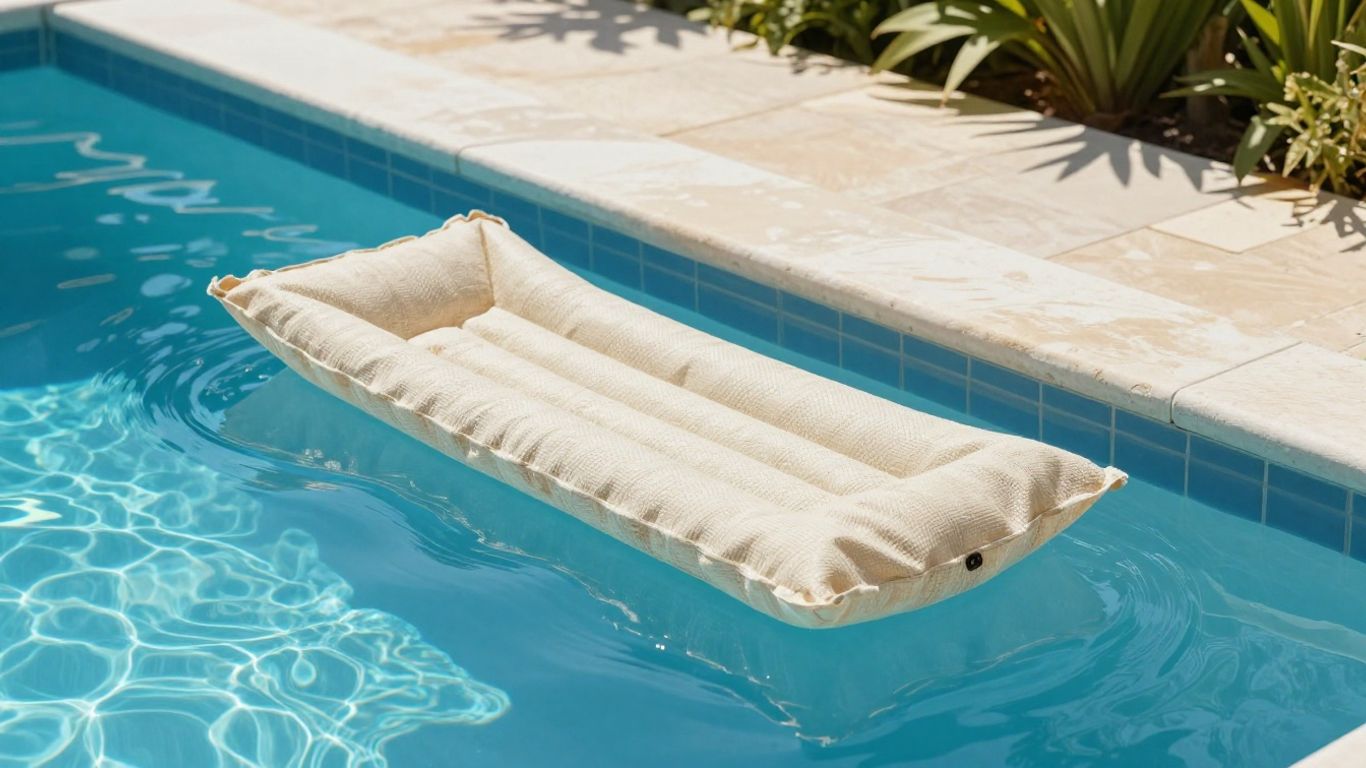
Poolside performance depends on more than the fiber name: weave, color, construction, and care all matter. Olefin is often chosen for outdoor textiles because it absorbs relatively little moisture, but that does not make every float immune to sun, chemicals, or staining. Think of the fabric as one part of a system that includes seams, the inner core, and the way you store the float. A little routine care helps you keep an eye on all of it.
Resistance to sun and fading
Olefin is commonly used in outdoor fabrics, and its low moisture absorption can help it perform well in poolside settings. Still, strong sunlight can fade textiles over time, with the result affected by dye, fabric construction, and how long the float is left exposed. If you leave a float out for long stretches, shade or storage can reduce unnecessary exposure. A colour that looks appealing in the shop is only part of the decision; ask how the specific fabric is made and cared for.
Drying time and moisture resistance
Because olefin fiber absorbs little water, an olefin cover may dry faster than a more absorbent textile, but the whole float can take longer. Water can remain in seams, a lining, or the flotation core, especially if the float has been immersed. Lift and drain it carefully, then let air move around both sides before putting it away. A dry outer surface alone is not proof that the interior is ready for storage.
How chlorine, salt, and sunscreen may affect the fabric
Chlorinated and salt water, along with sunscreen, can leave residue on a float. The effect varies with the fabric, its finish, and how long residue stays in contact with it, so a quick rinse after use is a sensible habit. If you use sunscreen, avoid letting a fresh application rub onto the fabric where practical. Treat care instructions for the particular float as the final word, especially if they differ from general textile advice.
How to choose an olefin fabric pool float
Start with what you want to do in the water: stretch out, sit upright, or keep a compact float that is easier to move. Then look past the cover material to dimensions, buoyancy, construction, and storage. A useful olefin-float buying and care guide can help you compare those details without treating fabric type as the whole decision. The best fit is the one that suits your pool and your way of using it.
Match the float style to how you plan to use it
Think about your usual position in the water and how much support you want. A full-length lounger gives you room to recline, while a recessed seat or a more compact shape may suit a relaxed, upright position. For a real-world example of the first style, the Floata-Long is made as a full-length lounger for one. This simple comparison can help you narrow the shape before you compare materials and details.
| Float style | Often suits | Check before buying |
|---|---|---|
| Full-length lounger | Stretching out | Overall length and support |
| Recessed-seat float | Sitting more upright | Seat depth and ease of entry |
| Compact float | Smaller pools or easier handling | Stability and weight limit |
| Two-person design | Sharing the float | Combined capacity and dimensions |
Match those broad categories to the way you actually use your pool. If you prefer a stable seat, the Floata-Round is described as a 140 cm design with a recessed seat; compare its measurements with your available space rather than relying on the name alone.
Check dimensions, weight capacity, and buoyancy
Compare the stated size with your pool, storage area, and the position you expect to use. Weight limits and buoyancy are product-specific, so follow the manufacturer’s figures rather than estimating from appearance. Pay attention to whether capacity refers to one person or more than one, and leave enough room to get on and off comfortably. A float that fits your body and water space is more useful than one that simply looks generous in a product photo.
Inspect the cover, seams, and flotation core
The cover is only the visible layer, so look for clear information about the inner core and how the two parts are joined. Seams and attachment points take repeated strain as you climb on, shift position, and lift the float out of the water. Ask whether the cover can be removed for cleaning and what care the core needs. In the same range, the Sinka-Bit float is listed among floats and loungers made with solution-dyed Olefin over a TPU bladder; those construction details are more useful than a broad durability label.
Consider storage space and portability
Storage can determine whether a float is easy to live with between swims. A design that deflates may take less room, while a float with a fixed or filled core may need a clear, dry place to rest. Consider how far you will carry it and whether lifting it when wet will be manageable. A few practical checks make the choice clearer:
- Measure the storage area, not just the pool.
- Check whether the float deflates or has a removable cover.
- Consider the float’s weight when wet as well as when dry.
- Look for any included pump or other required accessories.
These details matter most when the float will be moved often or stored in a tight space. If you can keep it nearby, dry, and out of the way, you are more likely to maintain it properly.
How to clean and maintain an olefin pool float
Routine care is usually straightforward, but follow the instructions supplied with your float because covers and inner cores differ. Rinsing, thorough drying, and occasional inspection help you catch residue or wear before it becomes a bigger nuisance. Avoid assuming that a washable cover means the whole float can go in a washing machine. Give the core the same attention as the fabric.
Rinse off chlorine, salt, and sunscreen
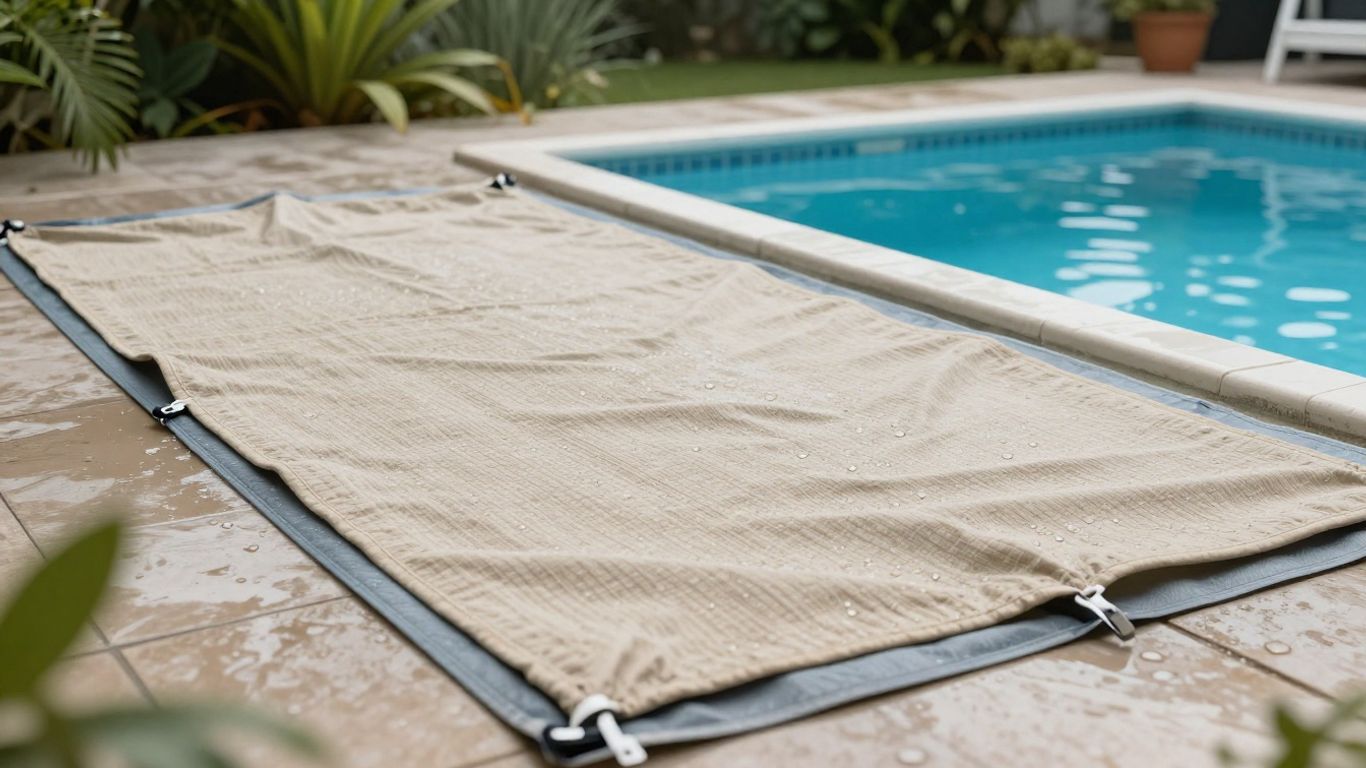
After swimming, rinse the cover with fresh water to remove pool or salt residue and sunscreen. A simple routine keeps the job manageable and reduces the chance that residue sits on the fabric between uses. If the care label provides different directions, use those instead.
- Drain excess water before moving the float.
- Rinse the fabric with fresh water after pool or saltwater use.
- Check seams and folds for trapped residue.
- Leave the float open to air so moisture can escape.
Let it drain before carrying it any distance, especially if the inner construction can hold water. Rinsing is useful, but drying is what makes the routine complete.
Remove stains without damaging the fabric
For a mark, start with a gentle method: cool water, a soft cloth, and a mild cleaner approved by the manufacturer. Test any cleaner on a discreet area first, and avoid harsh scrubbing or unapproved solvents that could affect the fabric or finish. If the cover is removable, check whether its care label allows machine washing and follow the stated temperature and cycle. A stain that does not lift with gentle cleaning is a reason to consult the manufacturer’s guidance, not to keep escalating the cleaner.
Dry the float fully before storing it
Air-dry the float in a well-ventilated place and turn or position it so water can drain from seams and folds. The inner core may need longer than the cover, so give it time rather than packing it away while damp. Store the float dry and out of direct sun when it will not be used for an extended period. For a simple routine on rinsing and storing, see the pool-float care guide.
Check for wear at seams and attachment points
Inspect the float periodically, especially where seams, zippers, handles, or other attachments meet the cover. Look for loose stitching, splits, or changes in the way the inner structure holds its shape. If you notice damage, stop using the float until you understand whether it can be repaired safely. Small checks between swims are easier than discovering a problem when you are already in the water.
Safety and comfort considerations
Comfort is useful, but a float does not make water safe for every swimmer. Choose a design that suits your ability and the conditions, and follow the manufacturer's instructions about use and capacity. A surface that feels pleasant on dry land may feel different when wet, so consider support and ease of movement as well. Keep supervision and sensible water habits in place regardless of the float’s size or material.
Use the float in water that suits your swimming ability
Use a pool float only in water and conditions appropriate to your swimming ability. It is not a life-saving device, and you should not rely on it to keep you safe or to replace active supervision of children. Avoid rough water and follow any product warnings about jumping, diving, or standing on the float. Keep within reach of safe entry and exit points.
Follow the manufacturer’s weight and use limits
Check the stated weight capacity and intended use before anyone gets on the float. Do not exceed its limit or use it in a way the manufacturer excludes, since that can affect stability and put strain on the construction. If more than one person plans to use it, verify that the product is designed for that use. When in doubt, choose a float with clear, specific instructions.
Look for supportive shapes and comfortable surfaces
A supportive shape should make it easy for you to settle into a comfortable position without awkward balancing. Look at the seat or back support, the surface texture, and whether the design suits sitting or reclining. If possible, consider how you will get on and off as well as how you will lounge. Comfort is personal, so a little attention to shape can matter more than an extra feature you will rarely use.
Olefin compared with other pool-float fabrics
Olefin, polyester, and acrylic are all used in outdoor textiles, but the name of a fiber cannot tell you everything about a finished float. Weave, finish, color, construction, and care instructions affect how each specific fabric behaves. Compare the actual product details rather than treating one material as automatically better in every situation. The cover is only one part of a float’s overall performance.
Olefin versus polyester
Olefin generally absorbs little moisture, while polyester is also widely used in outdoor fabrics and may be finished in different ways. Sun resistance, drying, and feel depend on the particular yarn and fabric construction, so avoid relying on a broad fiber label alone. Compare care requirements and ask how the fabric is intended to be used around pools. For either material, seams and the flotation core remain part of the decision.
Olefin versus acrylic
Acrylic outdoor fabrics are often selected for color and outdoor performance, while olefin’s low moisture absorption can be useful in damp settings. Those are general tendencies, not guarantees about every float. Look at the specific fabric, its construction, and its care instructions, especially if it will see regular sun and pool water. Comfort and drying time can also vary with weave and thickness.
When fabric type matters less than float construction
A well-chosen fabric cannot compensate for a poorly suited shape or unclear inner construction. Before settling on a fiber, confirm the float’s capacity, seams, core, and storage requirements. If two options meet your material preferences, the more practical design may be the one that is easier to get onto, rinse, dry, and store. Those details are often what you notice after the first few uses.
Conclusion
An olefin fabric pool float can be a comfortable choice for poolside lounging, but the fabric is only part of the story. Compare the shape, inner construction, dimensions, care instructions, and storage needs, then rinse and dry the float after use. With a design that suits your pool and a little routine attention, you can make a more informed choice and keep it ready for the next swim.
Frequently Asked Questions
What is an olefin fabric pool float?
It is a pool float with an outer cover made from olefin, a synthetic fiber. The float’s buoyancy comes from its inner construction, which varies by design.
Does olefin fabric dry quickly?
Olefin fibers absorb relatively little water, which can help the cover dry. Seams, linings, and the flotation core may retain moisture, so allow the entire float to air-dry before storing it.
Can an olefin pool float be left in the sun?
It may be designed for outdoor use, but prolonged sun exposure can affect color and materials over time. Follow the product’s care advice and store it out of direct sun when it will not be used for a while.
How should I clean an olefin pool float?
Rinse off pool or salt residue with fresh water and use a mild cleaner only if the manufacturer allows it. Check care labels before washing a removable cover.
Can sunscreen stain a pool float?
Sunscreen can leave residue or marks on some fabrics. Rinse the float after use and follow its care instructions if a stain appears.
Are fabric-covered pool floats safer than inflatables?
Neither fabric nor inflatable construction makes a float a safety device. Use a float suited to your ability, follow its capacity and use limits, and supervise children around water.
What should I check before buying a pool float?
Compare dimensions, weight capacity, buoyancy, cover, seams, inner core, and storage needs. Choose a shape that suits how you plan to lounge and can be cared for properly.