


How to choose durable pool floats that last season after season
Key Takeaways
A float lasts longer when its materials, construction, and care match the way you use it. A few checks before buying—and simple habits afterward—can help you get more seasons from it.
- Choose materials and construction suited to how often and where you’ll use the float.
- Check seams, weight limits, care guidance, and warranty terms before buying.
- Match the float’s shape and support to your activity and who will use it.
- Rinse and dry floats after use, and keep them away from sharp surfaces and prolonged exposure.
- Store floats according to the manufacturer’s directions and retire any that are no longer safe.
What makes a pool float durable
A float’s lifespan depends on more than the thickness of its surface. Materials, joins, fit, and the way you handle it all matter, especially when it sees frequent use. When comparing durable pool floats, look for a combination of sound construction and care instructions you can realistically follow.
Materials that resist punctures and wear
Different materials cope with wear in different ways, and none is immune to damage. Inflatable designs can be easy to carry and store, while foam avoids air leaks; fabric-covered styles may combine a cover with an inner structure. This comparison of float materials can help you weigh the trade-offs rather than judging by appearance alone.
| Float type | Possible advantage | What to check |
|---|---|---|
| Inflatable PVC or vinyl | Packs down for storage | Surface thickness, seams, and inflation guidance |
| Foam | No air chamber to puncture | Tears, surface wear, and storage needs |
| Fabric-covered | Soft surface and varied shapes | Cover care, inner construction, and drying time |
| Mesh or hybrid | Allows water to pass through some areas | Support, attachment points, and intended use |
Think of the table as a starting point, not a promise of lifespan. A well-made float can still wear out if it is dragged across rough ground or left in harsh conditions, so construction and care belong in the same decision.
Seams, welds, and construction quality
On an inflatable, seams and attachment points are natural places to inspect closely because they join sections that can flex under use. Look for even finishing, secure joins, and clear notes about how the float should be inflated and handled. On fabric-covered designs, check how the cover fits and whether care instructions explain how to rinse and dry it.
A neat appearance is useful, but it cannot tell you everything about construction. Product specifications and close-up photos can offer more detail, especially around edges, joins, and places that bear weight.
Weight capacity and structural support
A stated weight limit helps you decide whether a float is suitable for its intended user and activity. Check the limit for the specific model rather than assuming that a larger-looking float can support more weight. If the product page does not make this information easy to find, ask before buying.
Also consider how support is arranged. A lounger, seat, and hammock hold the body differently, so the shape should fit how you plan to rest or move on the water. Use a float only as directed; it is not a substitute for supervision or a personal flotation device.
How design affects stability and longevity
A float’s shape affects how it sits in the water and how easy it is to get on and off. Wider designs may feel different from narrow loungers, while a recessed seat or backrest can change your posture. The Poolboy Floata-Round, for example, is described as a 140 cm design with a recessed seat and a welded TPU core.
Think about how much room you have, how you’ll enter the float, and whether you want to sit upright or stretch out. A design that suits your routine is more likely to be used carefully than one that feels awkward from the start.
Compare common pool float materials
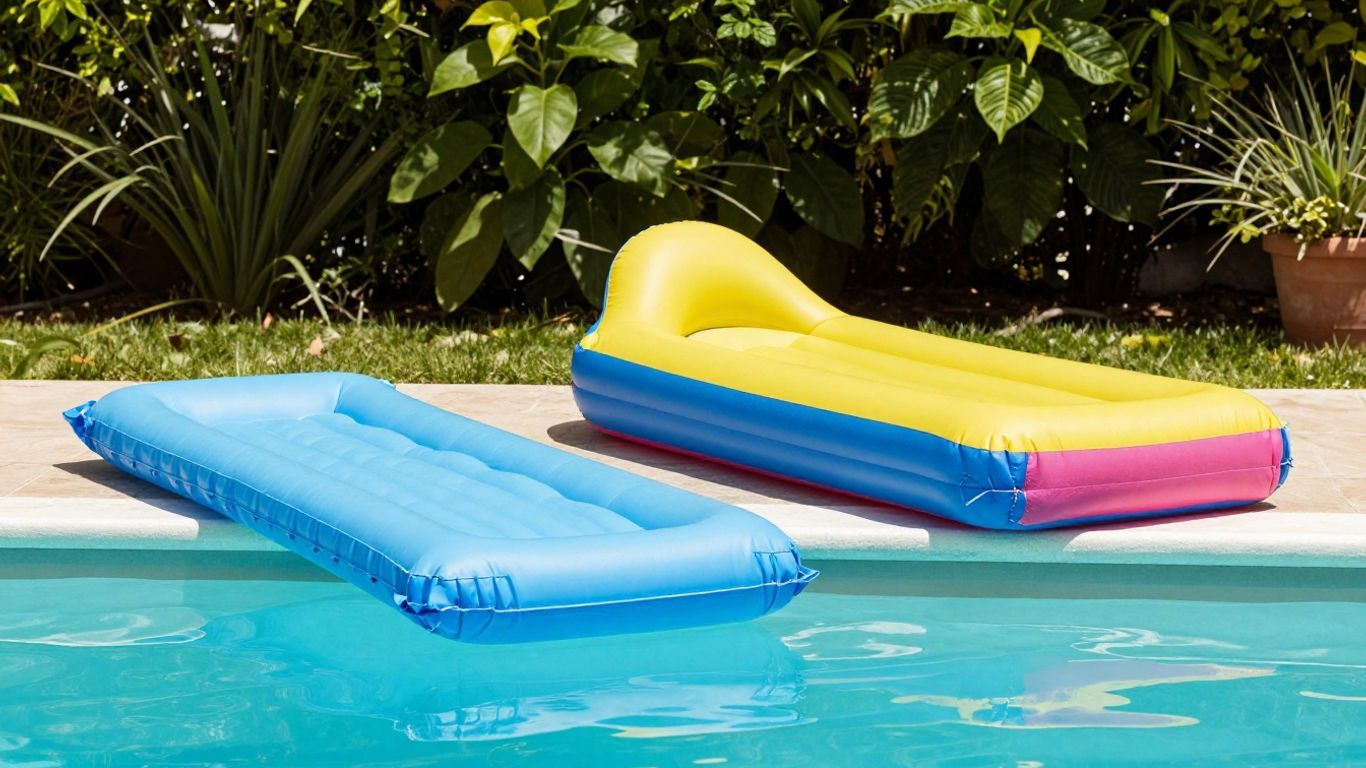
The material affects comfort, portability, and the kind of care a float needs. It helps to compare the whole construction, rather than treating a cover or outer surface as the only thing that matters. A range of float styles can also give you a sense of how much shapes and intended uses vary.
PVC and vinyl for versatile use
PVC and vinyl inflatables are common options when you want a float that can be deflated for storage. Their convenience depends on the quality of the material and its seams, as well as how carefully you inflate and store it. Before choosing one, check for a stated weight limit and clear instructions for use and repair.
These materials are not automatically flimsy, but they can be punctured or stressed by overinflation and rough handling. Keep sharp objects away, and do not leave an inflated float baking in direct sun for long periods.
Foam for puncture resistance
Foam has no air chamber, so a puncture will not leave it flat. That can be appealing if you want to avoid pumping and patching, though the surface can still scuff or tear. Consider its size and storage requirements, too; a float that does not deflate can take up more room between swims.
Foam is not necessarily the best choice for every user or setting. Check how the design is meant to be used and whether it offers the posture and support you want.
Fabric-covered floats for comfort and style
Fabric-covered floats can offer a different feel from a bare inflatable surface, but the cover and the structure beneath it both deserve attention. Check whether the cover can be rinsed and dried easily, and whether product information explains the materials inside. In its product information, the Poolboy Floata-Long is described as a full-length lounger made with solution-dyed Olefin over a welded TPU core.
That construction detail gives you something concrete to compare when shopping. Poolboy describes the Floata-Long as designed to resist chlorine, salt, UV, and mould; resistance does not mean you can skip rinsing, drying, or sensible storage.
Mesh and hybrid designs for cooling and support
Mesh and hybrid designs can let water pass through part of the float, which may suit lounging close to the water. Their feel and support depend on the overall shape, the material around the mesh, and how those parts connect. Inspect attachment points and follow the intended-use guidance, especially if the float has several sections.
A hybrid may combine features that sound appealing on paper, but the mix should make sense for your routine. Think about whether you prefer a drier perch, a more immersed feel, or a compact float you can carry easily.
Match a float to how you’ll use it
A float that works well for a quiet poolside afternoon may not suit swimming, playing, or a busy family pool. Start with the activity and the user, then consider size and storage. Making that choice first helps you avoid paying for features you are unlikely to use.
Lounging, sitting, and swimming
For lounging, decide whether you want full-length support or a more upright position. A seat or hammock may be easier to get on and off than a long flat design, while a full-length float gives you room to stretch out. If you plan to move around in the water, choose a shape that is easy to handle and does not obstruct your movement.
Pay attention to the product’s intended use, not just its name. A leisure float is for relaxing, not for keeping a weak swimmer safe.
Choosing floats for children and families
For children, match the float to the child’s age, size, and ability, and follow the manufacturer’s instructions. An adult should supervise children closely in and around water; a float is not a safety device. For shared family use, check the weight limit and whether the shape is intended for one person or more.
A bright novelty design may be fun, but its shape should not distract from the basics: suitability, stability, and supervision. If a child is uncomfortable or the float is difficult to use, choose a different option rather than encouraging them to persist.
Using floats in pools, lakes, and other settings
A calm pool and an open lake are different environments. Check the manufacturer’s guidance for where the float is intended to be used, and avoid taking a pool float into conditions with current, wind, or boat traffic. Keep within a supervised swimming area and do not rely on a lounge float for safety.
For still water, size and ease of handling may matter as much as comfort. A short video can help you picture how different float shapes are used, but always follow the product’s own directions.
A float that suits one setting may not be appropriate elsewhere, so treat the intended-use guidance as part of the purchase decision.
Balancing portability with sturdiness
If you need to carry a float or store it in a small space, an inflatable model that deflates may be convenient. A foam or fabric-covered design may be less compact, depending on its construction. Compare packed size, weight, and the time needed to prepare it for use—not just the dimensions when it is in the water.
Portability is useful only if the float remains manageable for you. If you regularly use it at home and have room to store it, a larger design may be worth the extra space.
Check durability before you buy
Product pages can make comparison easier when they give specific details instead of relying on broad words like “strong” or “premium.” Look for construction, dimensions, intended use, care guidance, and any stated limits. A clear description gives you a better basis for deciding whether the float fits your routine.
Read product specifications and warranty terms
Read the specifications for materials, dimensions, weight capacity, and construction. Check what the warranty covers, how long it lasts, and what care or use conditions apply. A warranty is useful information, but it does not mean damage from misuse will be covered.
Poolboy’s product information describes its floats as made with UV-stable, solution-dyed Olefin and a welded TPU core, and lists a 12-month warranty for the range. Read the terms for the specific product before buying, since the written conditions are what matter.
Look for useful safety and care information
Helpful product information should make intended use and basic maintenance clear. Before you buy, look for practical details such as:
- The float’s stated weight limit and intended user.
- Instructions for inflation, use, and storage.
- Guidance for rinsing, drying, and cleaning.
- Any warning that the float is not a life-saving device.
Clear guidance makes it easier to use the float as intended and to spot when something needs attention. If key safety or care details are missing, ask the seller before making a decision.
Assess reviews for recurring damage complaints
Reviews can be useful when you look for patterns rather than treating one comment as a verdict. Pay attention to repeated reports of leaks, seam failures, surface wear, or difficulty getting help with a repair. Also notice whether reviewers describe how often they used the float and how they stored it.
A single complaint may reflect unusual handling or a one-off fault. Several similar reports can point to a concern worth checking against the product specifications and warranty terms.
Spot features that may justify a higher price
A higher price may reflect materials, construction, a more considered shape, or an included accessory. Ask what you are actually getting: a stated material, a documented construction method, a useful warranty, or a design that fits your needs. A higher price alone does not establish that a float will last longer.
Compare the details rather than buying on appearance alone. If a feature does not change how you will use, care for, or store the float, it may not be worth paying extra for.
Protect floats from damage
Good care starts while the float is still in use. Heat, abrasion, excess pressure, and residue can all take a toll over time, though the right precautions vary by material. Follow the manufacturer’s directions first, then build a simple routine around them.
Inflate to the recommended firmness
For an inflatable float, follow the manufacturer’s inflation instructions and avoid forcing in extra air. Air pressure can change with temperature, so a float that feels firm in cool conditions may become more pressurized as it warms. Check it again if the weather changes noticeably.
A float should feel supportive without being stretched tight. If you notice bulging or stress at the seams, let out some air and inspect it before using it again.
Keep floats away from sharp edges and rough surfaces
Move floats over rough paving or concrete rather than dragging them across it. Keep them away from sharp pool edges, tools, pet claws, and other objects that could cut or snag the surface. This small habit can prevent damage before a patch is needed.
Inspect the float before use if it has been handled roughly or left near equipment. A small tear or loose join is easier to notice when you take a moment to look.
Limit prolonged sun and chemical exposure
Long periods in direct sun can be hard on many materials, and pool chemicals can leave residue on a float. When you are finished, move it out of strong sun and follow any product guidance about exposure and cleaning. Do not assume that a material described as UV- or chlorine-resistant needs no care.
The Floata-Long from Poolboy is described as designed to resist chlorine, salt, UV, and mould. As with any float, follow its care instructions rather than treating resistance as a reason to leave it exposed indefinitely.
Rinse and dry floats after use
Rinsing helps remove pool chemicals, salt, and other residue. Let the float dry fully before putting it away, especially if it has a cover or folded areas where dampness may linger. These steps are simple, but skipping them repeatedly can leave a float unpleasant to use or store.
If you use a float in a lake or another setting, rinse away any residue that may have collected on it. Use only cleaning methods the manufacturer recommends.
Store and repair pool floats
Storage is part of maintenance, not an afterthought. A float kept clean and dry, away from heat and pests, is less likely to be damaged between uses. Before putting it away for the season, inspect it and make sure you know how it should be stored.
Deflate or store according to the manufacturer’s instructions
Some floats are intended to be deflated for storage; others should be stored without folding or compressing them in a particular way. Follow the instructions for your model, and do not force a float into a small space if that bends its seams or structure. Keep any pump or repair kit with the product if that makes it easier to find next season.
If the instructions are unclear, contact the seller for advice rather than guessing. A little care at storage time can prevent avoidable wear.
Choose a cool, dry place away from pests
Store floats somewhere cool and dry, out of prolonged sun and away from sharp objects. Keep them away from pests that could chew or damage the material. Make sure the float is clean and fully dry before storage to reduce the chance of mildew or unpleasant odours.
Avoid piling heavy items on top of a float, particularly if it has an inner structure or fixed shape. Give it enough room to keep its form as the manufacturer recommends.
Patch small punctures with compatible repair materials
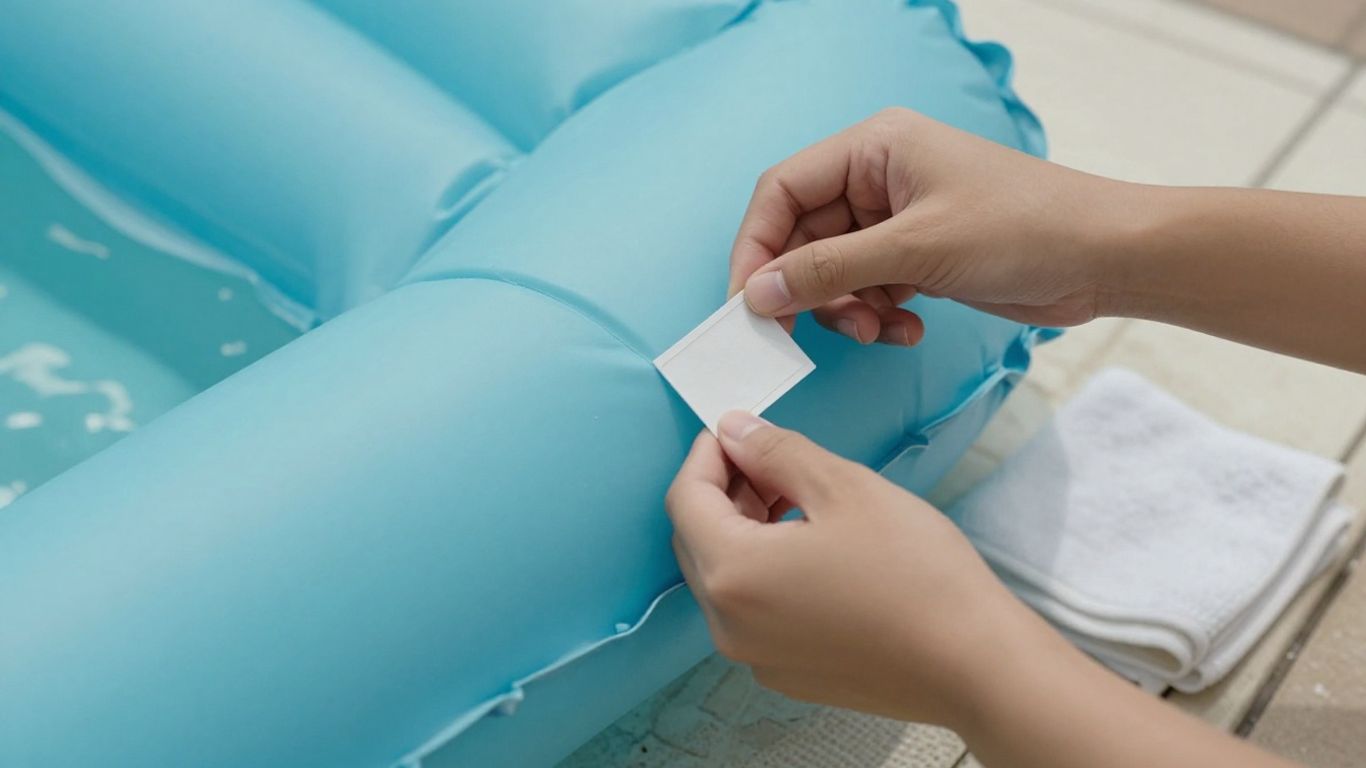
For a small puncture in a repairable inflatable, first identify the material and follow the manufacturer’s repair instructions. Use a compatible patch or repair kit, and allow the repair to set for the time specified before testing the float. An improvised adhesive may not bond properly or could damage the surface.
If you cannot locate the leak or the damage is near a seam, ask the manufacturer or seller whether repair is appropriate. A patch is not a fix for every kind of failure.
Know when a float is no longer safe to use
Stop using a float if it cannot hold air, has a damaged seam, or has a tear that affects its shape or support. Also retire it if its structure has become unstable or you cannot confirm that a repair is secure. Do not try to make an unsafe float usable by exceeding its stated capacity or changing how it is meant to be used.
When in doubt, keep it out of the water. Replacing a damaged float is a better choice than relying on it when it no longer works as intended.
Conclusion
Choosing a float that fits your routine, checking how it is made, and caring for it after each use can all help it last. Read the product guidance, store it properly, and stop using it if damage affects its support or safety.
Frequently Asked Questions
What makes a pool float durable?
Durability comes from suitable materials, sound construction, and care that matches the manufacturer’s instructions. How often and where you use the float also matter.
Are foam pool floats more durable than inflatables?
Foam has no air chamber to puncture, but it can still scuff or tear. Inflatables can be convenient to store, though they need protection from punctures and careful inflation.
How can I tell if a float’s seams are well made?
Look for even, secure joins and check product photos and specifications for construction details. Repeated reports of seam problems in reviews may be worth investigating.
Can I leave a pool float in the sun?
It is better to limit prolonged direct sun exposure and follow the manufacturer’s instructions. Move the float out of strong sun when it is not in use.
Should I rinse a pool float after swimming?
Rinsing can remove chlorine, salt, and other residue. Let the float dry completely before storing it.
How should I store a pool float over winter?
Clean and dry it first, then store it according to its manufacturer’s directions in a cool, dry place away from pests and sharp objects. Deflate it only if the instructions recommend doing so.
Can a small hole in an inflatable pool float be repaired?
Some small punctures can be patched with repair materials compatible with the float. Follow the manufacturer’s repair instructions, and do not use the float if the damage affects a seam, support, or safe operation.