






How to clean fabric pool floats in Australia: a practical care guide
Key Takeaways
A gentle routine is usually enough to keep a fabric pool float fresh between swims. Check its care guidance first, then rinse, wash, and dry it with care.
- Check the label and construction before cleaning.
- Use mild detergent, clean water, and soft tools.
- Rinse off pool water and sunscreen after use.
- Treat stains and mildew cautiously; avoid harsh chemicals unless the maker permits them.
- Dry the float completely before putting it away.
Check the fabric and care instructions first
Fabric floats can have removable covers, inner inserts, or seams that need different handling. Before reaching for soap and water, check how yours is constructed and read any care instructions. If you’re searching for how to clean fabric pool floats Australia, start with the float itself rather than assuming every fabric can be washed the same way.
Identify removable covers and inner inserts
Look for zippers, fasteners, or openings that show whether a cover can come off and whether the float has a separate inner core. Don’t pull at a seam or force a cover open; if the construction is unclear, treat the float as one piece and clean only the fabric surface. Poolboy Floata-Long is made with solution-dyed Olefin fabric over a welded TPU core, a construction detail worth keeping in mind when deciding not to soak a float.
Look for washing symbols and manufacturer guidance
Check the sewn-in label and any instructions that came with the float, especially for washing temperature, removable parts, and drying. The care label wins over general cleaning tips, so use the maker’s directions if they differ from the routine in this guide. For another practical overview of label-first cleaning, see these float-cleaning instructions.
A quick guide to common label directions can help you decide what to do next. If the label is missing, use the gentlest method and avoid machine washing or soaking until you can confirm it is suitable.
| Care guidance | What it usually means | A cautious next step |
|---|---|---|
| Hand wash | Clean gently by hand | Use a cloth and mild detergent |
| Do not bleach | Avoid bleach-based products | Choose plain, mild detergent instead |
| Do not tumble dry | Keep away from dryer heat | Air-dry in a ventilated spot |
| No clear instructions | Method is uncertain | Spot-test and clean the surface gently |
These cues are a starting point, not a substitute for instructions specific to your float. When in doubt, contact the maker before using a stronger cleaner or removing an insert.
Test a cleaner on a hidden spot
Even a mild cleaner may affect a finish or color, so try it first on a small, inconspicuous area. Apply a little diluted solution with a soft cloth, then rinse and let the spot dry before checking for color transfer, fading, or texture changes. If you notice any change, stop and use clean water or seek advice from the manufacturer.
Gather gentle cleaning supplies
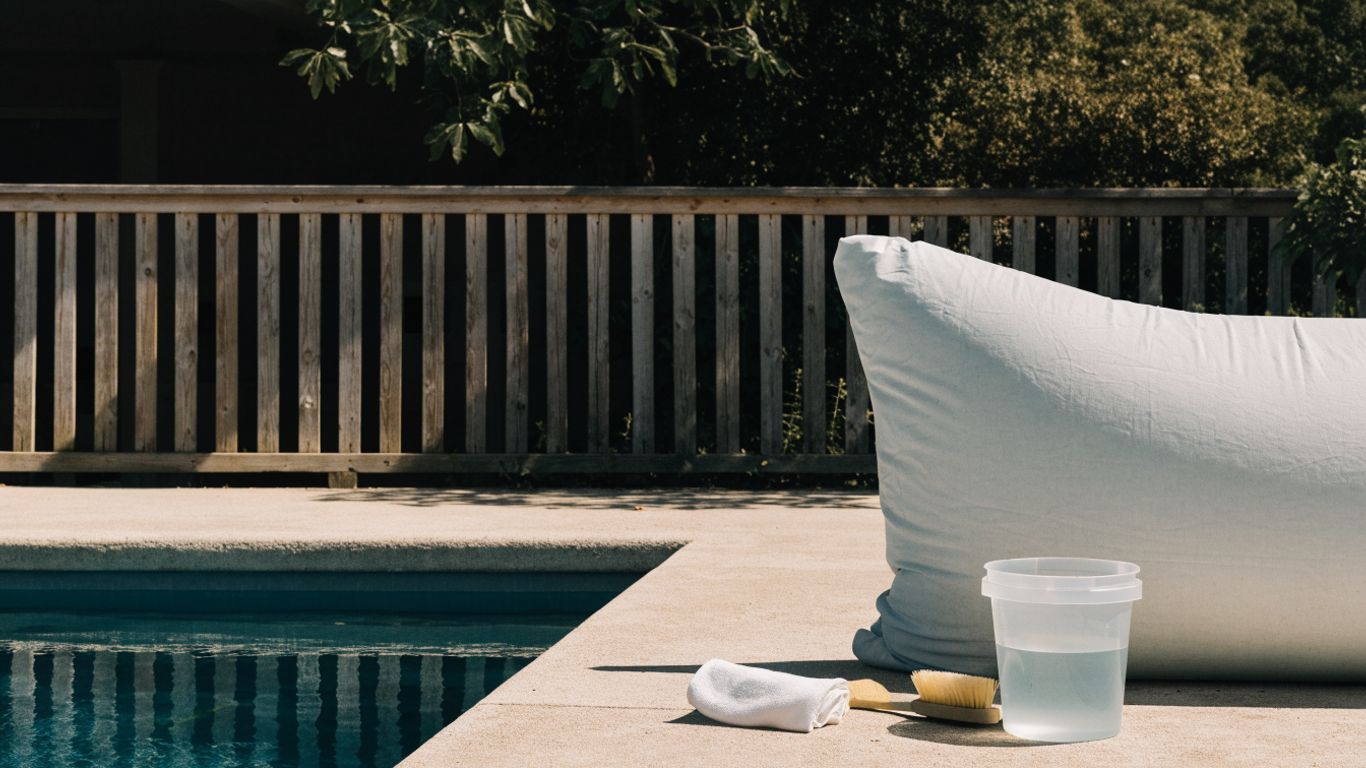
You don’t need a complicated kit for routine care: a basin or bucket, fresh water, a mild detergent, and a soft cloth are often enough. Keep a soft-bristled brush nearby for seams or textured areas, but start with the cloth. The aim is to lift surface grime without roughing up the fabric or stressing the seams.
Choose a mild detergent and soft brush
Pick a mild detergent without bleach or strong stain-removing additives, unless the float’s care instructions specifically allow them. A clean sponge or soft cloth is suitable for broad surfaces; a soft brush can help with dirt caught at seams. Poolboy Floata-Round is also made with solution-dyed Olefin fabric over a welded TPU core, so a gentle surface-cleaning approach is a sensible default while you follow its care guidance.
Prepare a solution for routine washing
Mix a small amount of detergent into a basin of cool or lukewarm water, following the detergent directions and avoiding an overly concentrated mix. Keeping the solution mild makes it easier to rinse away and reduces the chance of leaving a soapy film behind.
For a straightforward wash, work in this order:
- Remove loose leaves, grit, or debris by hand.
- Wet a cloth in the diluted solution and clean a small area at a time.
- Use the soft brush lightly on seams or marks that need a little extra attention.
- Keep the float supported and avoid pressing hard on the filling.
This measured approach gives you control over how much water reaches the float. Refresh the solution if it becomes visibly dirty rather than spreading grime around.
Avoid harsh chemicals and abrasive tools
Bleach, strong solvents, scouring pads, and stiff brushes can damage fabric, alter color, or weaken a surface. Don’t combine cleaning products, either; a simple detergent solution is easier to control. If a stain doesn’t lift with gentle cleaning, check the care instructions before escalating to a specialist product.
Clean floats after regular pool use
A quick rinse after swimming can remove residue before it dries on the fabric. Pool water, salt, sunscreen, and body oils can all leave marks or a tacky feel if they sit for long periods. Regular, light care is often easier than trying to undo a season’s worth of buildup in one go.
Rinse away chlorine, salt, and sunscreen
Rinse the float with fresh water after use, paying attention to folds, seams, and areas that touched skin. If you have been swimming in salt water as well as a pool, rinse thoroughly rather than letting salty water dry on the fabric. A gentle rinse is a useful first step before any spot-cleaning.
Wash the fabric without soaking the inner core
If the care label permits washing, dampen the fabric with your detergent solution and wipe it in small sections. Avoid immersing the whole float unless the manufacturer says that is safe; excess water can remain trapped in the inner filling and take a long time to dry. Poolboy Sinka-Bit uses solution-dyed Olefin fabric over a welded TPU core, so check the product’s care guidance rather than assuming the core should be soaked.
For a visual reference to gentle fabric cleaning, use this video search prompt as a general demonstration, not as a replacement for your float’s own instructions.
Remove soap residue with clean water
Wipe the cleaned areas with a fresh cloth dampened with clean water, changing the water as it becomes soapy. Residue can leave the surface feeling slippery or attract more dirt, so take time to rinse folds and seams as well as the broad panels. Finish by checking the fabric with your hand; if it still feels slick, wipe it again with clean water.
Treat stains, odors, and mildew carefully
A mark that remains after a rinse may need a little targeted attention, but scrubbing hard can make matters worse. Work on a small area, keep the fabric damp rather than saturated, and follow the care instructions before trying a stain treatment. If an odor or patch of mildew persists, don’t hide it by putting the float away wet.
Lift sunscreen and body-oil marks
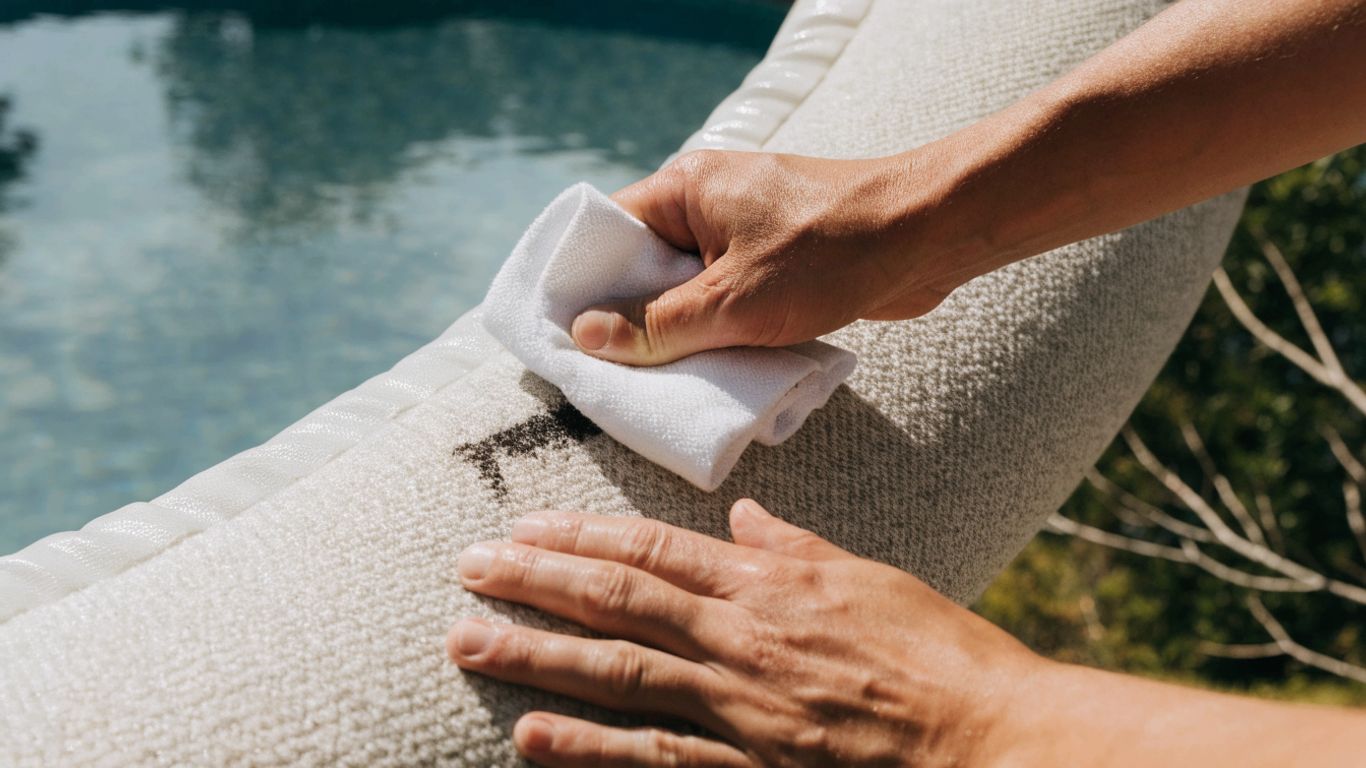
Sunscreen and body oils can leave a greasy patch, particularly where skin rests against the fabric. Blot away any excess first, then dab the area with a cloth dipped in mild detergent solution and rinse it with clean water. Avoid rubbing the stain outward or reaching for a strong degreaser unless the maker confirms it is suitable.
Address mildew before it spreads
If you see a musty smell or small mildew spots, move the float to a ventilated area and clean it promptly using the gentlest method allowed by its label. Don’t use bleach or mix cleaning products as a shortcut; either may harm the fabric or create unsafe fumes. If the affected area is extensive, returns after cleaning, or appears to involve the inner filling, ask the manufacturer or a professional cleaner for advice.
Know when a float needs professional cleaning
Professional advice is worth considering when a stain will not lift, the fabric has changed texture, or an odor seems to come from inside the float. A cleaner can also help if the care label is missing and the construction makes a home wash risky. Stop cleaning if seams begin to pull or the fabric shows damage, and don’t use the float again until you have checked that it remains in suitable condition.
Dry floats fully before storing
A float may feel dry on the outside while dampness remains in seams, folds, or filling. Give it enough time and airflow to dry before storage, especially after spot-cleaning or a more thorough wash. Putting it away damp can leave it smelling stale and make mildew more likely.
Press out excess water without twisting
After cleaning, support the float and press gently with a clean towel to absorb surface water. Don’t wring or twist it, as that can strain seams or distort the filling. If the float has removable parts and the instructions allow removal, dry those pieces separately.
Air-dry in a shaded, well-ventilated area
Set the float somewhere with good airflow and out of direct sun while it dries. Turn or reposition it occasionally so the underside and folded areas are not left damp against a surface. Drying may take longer than expected, so rely on a proper check rather than assuming it is ready after a few hours.
Check seams and filling for lingering dampness
Feel along seams, corners, and any thick or layered areas before putting the float away. If there is a removable cover, check both it and the inner insert; if not, allow extra drying time where the fabric feels cool or damp. For additional advice on putting floats away after summer, see these end-of-season storage tips.
Protect floats from Australian sun and storage damage
Strong sun and heat can be hard on poolside materials, while damp storage can cause its own problems. When you’re not using a float, move it out of prolonged direct sunlight and keep it somewhere clean and dry. A little attention between swims helps avoid unnecessary wear.
Limit prolonged exposure to UV and heat
When a float is not in use, bring it under shade or indoors rather than leaving it out in full sun all day. Avoid placing it against hot surfaces or near heat sources while drying. Check the product’s care guidance for any specific limits, particularly if the float will spend long periods outdoors.
Store floats clean, dry, and off the ground
Once the float is completely dry, store it in a clean, ventilated place where it won’t be crushed under heavy items. Keep it off damp floors and away from sharp edges that could snag the cover. If you fold or stack it, do so gently and follow any storage directions from the maker.
Adjust care for coastal air and humid conditions
Near the coast, rinse off salt residue with fresh water and let the float dry fully before putting it away. In humid conditions, allow extra ventilation and check stored floats periodically for dampness or musty odors. If you notice moisture, take the float out, air it again, and reassess the storage spot.
Conclusion
For reliable fabric-float care, let the label guide you, clean with mild supplies, rinse away residue, and give the float time to dry completely. Gentle, regular attention is usually less work than dealing with a stubborn stain or damp storage later.
Frequently Asked Questions
Can you machine-wash a fabric pool float?
Only if the manufacturer’s instructions say machine washing is suitable. Many floats have inner components or seams that can be affected by a machine cycle, so hand-cleaning the surface is the safer default when guidance is unclear.
How often should you clean a fabric pool float?
Rinse it after pool or salt-water use, and clean more thoroughly when you notice residue, a mark, or an odor. The right frequency depends on how often you use it and the maker’s care directions.
What detergent should you use on a pool float?
Use a mild detergent diluted in water, unless the care label specifies another product. Avoid bleach and strong stain removers unless the manufacturer confirms they are safe for the float.
Can you soak a fabric pool float?
Don’t soak it unless the care instructions explicitly allow it. Water can remain trapped in the inner filling, making the float difficult to dry fully.
How do you remove sunscreen from a fabric float?
Blot away excess sunscreen, dab the mark with mild detergent solution, and rinse the area with clean water. Test the solution on a hidden spot first and avoid scrubbing aggressively.
How can you tell when a pool float is dry enough to store?
Check seams, folds, and thicker areas by touch, and inspect any removable cover and insert separately. If any area feels cool or damp, leave the float out to air longer.
What should you do if a pool float smells musty?
Air it in a well-ventilated place and clean it according to its care instructions. If the odor remains or seems to come from the filling, ask the manufacturer or a professional cleaner for advice before storing it.
