


Pool loungers New Zealand: a buyer’s guide to choosing the right style
Key Takeaways
The right pool lounger depends on how you want to relax, how much space you have, and what conditions it will face. Use these points to narrow your choices before you buy.
- Choose a fixed, adjustable, folding, in-pool, or floating style to suit your routine.
- Compare frame, fabric, and finish choices against sun, moisture, chlorine, and salt exposure.
- Measure the area and check comfort, weight limits, and how easily you can move the lounger.
- Coordinate colour, shade, and accessories so the setup works as well as it looks.
- Check total cost, warranty terms, delivery details, and care needs before deciding.
Choose a lounger style for your pool area
Start with how you expect to use the lounger: long stretches of reading, a quick dip between chores, or a seat that keeps you close to the water. The options range from sturdy deck furniture to floats designed to sit on the pool surface. Poolboy keeps its range to three fabric float designs, each intended for a different way of lounging in the water. Knowing which style fits your routine makes the rest of the decision easier.
Compare fixed, adjustable, and folding designs
A fixed lounger is straightforward: it stays in one position and is ready whenever you want to use it. Adjustable backs give you more choice, whether you prefer sitting upright or reclining, while folding designs can be useful if you need to clear the deck or store furniture away. Think about how often you will change positions and whether the lounger will have a permanent spot.
This quick comparison can help you focus on what matters most for your space:
| Design | Useful when | Consider before buying |
|---|---|---|
| Fixed | You want a simple, consistent place to recline | Check whether the angle suits reading and resting |
| Adjustable | You expect to sit up as well as stretch out | Try each backrest position if possible |
| Folding | You need to move or store the lounger regularly | Check the folded size and how it locks in place |
| Floating | You want to lounge on the water | Confirm its dimensions and intended use |
Treat these as starting points, not strict categories: a fixed design can be a good fit if you already know your preferred position. If you are comparing floating options, these fabric pool floats and loungers offer a useful reference for considering different ways to relax in the water.
Decide between in-pool, poolside, and floating loungers
An in-pool lounger is designed to sit partly in the water, while a poolside model stays on the deck. A floating lounger moves with the water and can make a small pool feel more inviting without taking up permanent deck space. Check that the type you choose is intended for the setting where you plan to use it, and consider how you will get in and out comfortably.
The fabric-built pool float designs illustrate the range of ways a float can be used, from lying down to sitting or resting partly in the water. For a more specific comparison, the Poolboy Floata-Long is a 160 cm fabric pool lounger designed for one person to lie flat. Its proportions and intended position may suit you if you want a full-length float rather than an upright seat.
Match the style to your outdoor space and routine
Consider your normal pool day, rather than an idealised one. If you like to read, a stable surface and a position that keeps your book dry may matter; if you prefer to cool off, a floating option could be more appealing. A large, permanent deck lounger might be less useful if you regularly need the area clear for children, guests, or pool maintenance.
A simple way to narrow the choice is to picture where the lounger will sit and when you will use it. Leave room for circulation around the pool and check whether you can move the lounger without dragging it across a delicate surface. A good fit should make the pool easier to enjoy, not create another obstacle on the deck.
Select materials suited to New Zealand conditions
Outdoor loungers have to cope with more than occasional splashes. Sun, humidity, pool chemicals, and, in coastal areas, salty air can all influence how materials look and feel over time. Consider the frame and the fabric separately, since they may need different kinds of care. A little attention to construction details now can make upkeep simpler later.
Weigh the durability of aluminum, timber, and resin
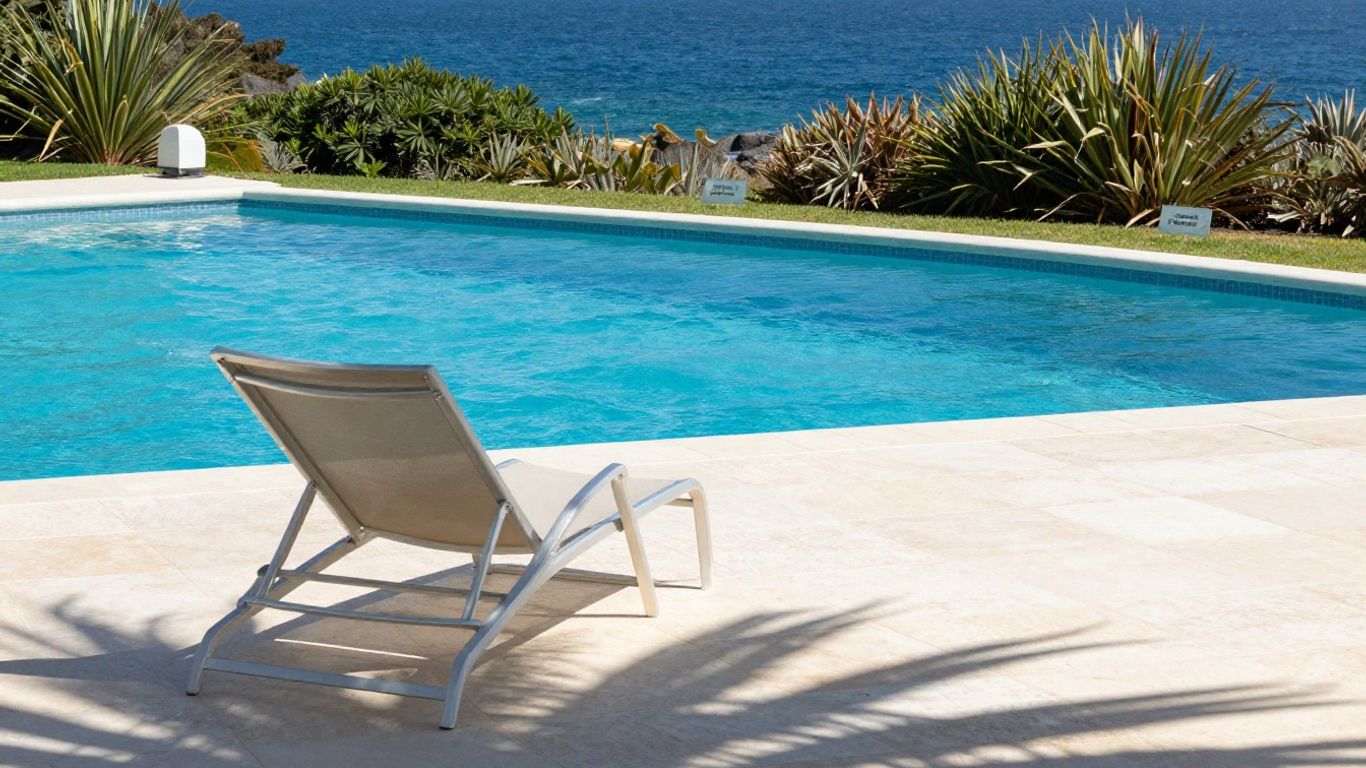
Aluminum, timber, and resin each create a different look and maintenance routine. When comparing frames, check the finish, joints, and any hardware as well as the headline material. Ask what cleaning or seasonal care the maker recommends, and whether the frame is intended to remain outdoors between uses.
For fabric floats, construction is part of the material decision too. The Poolboy Floata-Long uses solution-dyed Olefin fabric over a welded TPU core. That documented combination gives you specific details to compare when you are assessing fabric-based designs, rather than relying only on a colour sample or product photo.
Check fabric performance in sun, moisture, and salt air
Fabric choice affects both the feel of a lounger and the way you will care for it. Check whether the product information addresses the conditions it will face, such as sun exposure, splashes, and salt or chlorinated water. Also look for practical details: can the fabric be rinsed, does it need to dry before storage, and are care instructions easy to follow?
If your pool is near the coast, salty residue is worth factoring into your routine even when a material is described as suitable for outdoor use. For any fabric lounger, follow its own care instructions rather than assuming that every outdoor textile can be cleaned in the same way. Samples, where available, can help you judge texture and colour before committing.
Consider UV resistance and corrosion protection
The sun can fade some finishes, while moisture can be hard on unprotected metal components. Look for clear product information about UV resistance and corrosion protection, and check whether those claims apply to the fabric, frame, fasteners, or the whole product. Vague wording is less useful than knowing exactly which part has been treated or tested.
It can help to check the details in a consistent order: material, finish, exposure guidance, then cleaning instructions. In coastal settings, rinse and dry routines may be especially useful, but the maker’s directions should take priority. For any lounger, place it where it will be comfortable to use and practical to maintain.
Find the right size and level of comfort
A lounger can look compact online and feel surprisingly large once it is beside the pool. Measure the available area before you settle on a model, then consider how its shape and height will feel when you sit down or stretch out. Comfort is personal, so focus on the position you actually use rather than the number of settings in a product description. A few simple checks can prevent an awkward fit.
Measure the deck and allow room to move around loungers
Measure the footprint of the lounger, then leave enough clear space to walk around it and reach the pool safely. If you plan to use a side table or umbrella, include those in your layout too. Also check access to gates, steps, and storage; a piece that fits on the deck may still make the route through the area feel cramped.
For floating designs, compare the product dimensions with the pool’s usable surface and the space you want to keep open. The Poolboy Sinka-Bit is a floating hammock with Olefin bolsters and a quick-drying mesh centre, designed for lounging partly in the water. That style differs from a full-length surface float, so think about the position you want before deciding how much space to allow.
Compare seat height, backrest positions, and cushioning
Seat height matters when you get in and out, especially if the lounger sits on a hard deck. If you can test one in person, notice whether the backrest supports your preferred position and whether the surface feels comfortable after more than a few minutes. For cushioned furniture, check whether the cushions are intended to stay outdoors or should be brought inside after use.
A floating design may not have the same kind of frame or adjustable back as a deck chair, so compare like with like. Look at the product’s shape and support points, then consider whether you want to sit upright, recline, or lie flat. If you are shopping online, product dimensions and clear photographs can help you judge the fit, though they cannot replace trying a lounger yourself.
Check weight limits and ease of repositioning
Before buying, find the stated weight limit and check that it matches the intended user. If the product will be shared, make sure its size and support suit everyone who plans to use it. Consider whether it is easy to lift, carry, or move out of the way, especially if you need to store it between swims.
A short video can help you see how a lounger moves or sits in a pool, but use it as a supplement to written specifications. Check product dimensions, assembly notes, and any weight guidance on the actual listing. These details are more useful for your decision than a vague promise that a lounger is suitable for everyone.
Coordinate loungers with your outdoor setup
A lounger should work with the pool area you already have, not make you redesign it around a single purchase. Look at the colours and finishes of the deck, fencing, planting, and any existing outdoor furniture. Then consider the practical details, like shade and a place to put a drink or towel. A little coordination can make the area feel settled without making it look overly matched.
Choose colors and finishes that complement the pool area
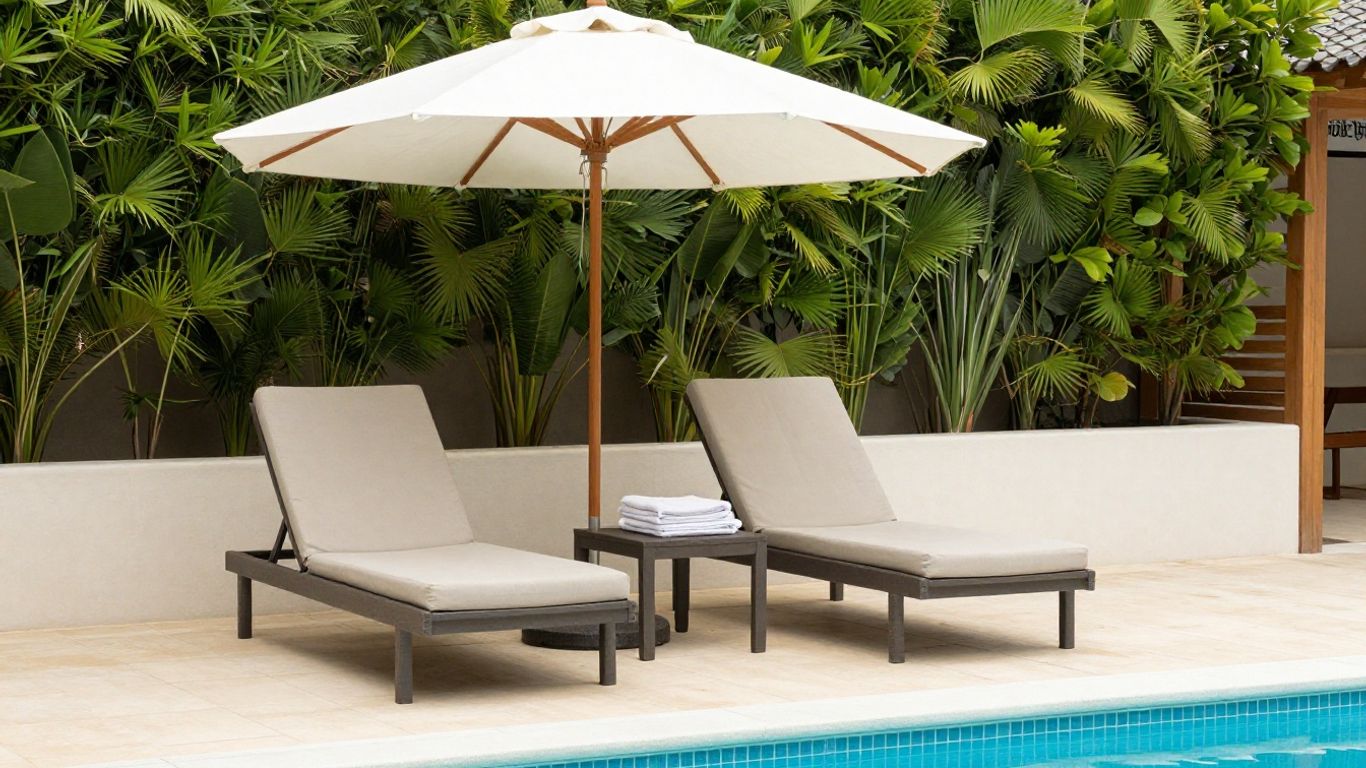
Start with the dominant colours around the pool and decide whether you want the lounger to blend in or stand out. Neutral shades can sit quietly beside stone, timber, or greenery, while a stronger colour can give a plain deck a focal point. Check colours in natural light where possible, since a small online swatch can look different outdoors.
For a simpler decision, choose one main tone and repeat it in a cushion, towel, or nearby accessory. There is no need for every surface to match exactly. A consistent palette usually feels more considered than buying pieces in identical shades simply because they are sold together.
Pair loungers with shade, side tables, and outdoor cushions
Shade changes where and when you will use a lounger, so think about the sun’s path across the deck. An umbrella or other shade source can make a bright spot more comfortable, while a compact side table keeps a drink or book within reach. Make sure both can be positioned without blocking walkways or access to the pool.
Cushions can add comfort to deck furniture, but check whether they need to be removed when not in use. For floating products, use only accessories that make sense for the product’s intended setting. A setup that is easy to arrange and clear away tends to get used more often than one that requires a bit of a production.
Plan storage for cushions and accessories
Think about where towels, cushions, and small accessories will go when the pool area is not in use. A storage box or sheltered spot can keep the deck tidier and reduce the number of items left in changing weather. Before choosing storage, check its capacity and whether it will be easy to reach without moving the loungers.
For a simple routine, group the items you are most likely to put away together:
- Keep cushions in a dry, accessible place when they are not in use.
- Choose a regular spot for towels and smaller pool accessories.
- Leave enough room to move loungers without shifting other furniture.
- Check that stored items can dry properly before being put away.
This small bit of planning helps keep the pool area ready for the next swim. It also makes it easier to spot what needs cleaning or replacing before the season gets busy.
Compare prices, warranties, and delivery options
The purchase price is only one part of choosing a lounger. Compare what is included, how long the product is covered for, and whether delivery will work for your address. Read the product details carefully rather than assuming that similar-looking items come with the same terms. A quick check now can prevent surprises when the box arrives.
Assess value beyond the initial purchase price
Compare the materials, construction, included accessories, and care requirements alongside the price. A lower initial cost may suit you if the lounger meets your needs, while a more detailed build may be worth considering if durability and long-term use matter to you. Avoid treating price alone as a reliable guide to comfort or service life.
Also check what arrives with the product: assembly components, a pump for an inflatable design, or care guidance may affect how ready it is to use. Look at shipping charges and any costs for returning an item that does not fit your space. Those details help you compare the full purchase rather than a number on a product card.
Review warranty coverage and replacement-part availability
Read the warranty terms to find out what is covered, how long coverage lasts, and what is excluded. Check whether the policy covers manufacturing faults only or also includes other types of damage, and note what you need to do if you make a claim. If a product has replaceable parts, ask whether they are available and how to order them.
Keep the receipt and any care instructions after delivery, since they may be useful if a question comes up later. Do not assume that every warranty is the same, even when two loungers share a similar design. The actual written terms are what matter.
Confirm delivery access, assembly, and returns
Before placing an order, check how the item will be delivered and whether it can reach the pool area through your gate, hallway, or side passage. Large loungers may need assembly, while some floating products arrive packed differently; confirm what the seller says about setup. If you are not sure about access, measure the narrowest point on the route.
Read the returns policy and note any requirements about packaging or the condition of the product. Ask about delivery timing for your location, including whether rural addresses take longer. Clear answers on access, assembly, and returns make it easier to order with confidence.
Maintain loungers for longer-lasting use
A simple care routine helps keep outdoor loungers ready for regular use. Pool water, sunscreen, and airborne dirt can leave residue, while damp storage can create problems for some materials. Follow the manufacturer’s instructions first, especially for detergents and any removable covers or cushions. A few minutes after a swim may save you a more involved clean later.
Rinse away chlorine, salt, and sunscreen residue
After use, rinse surfaces that have been exposed to pool water or salt with fresh water if the care instructions allow it. Pay attention to seams, handles, and areas where sunscreen or residue may collect. Let the lounger dry fully before covering or storing it, rather than trapping moisture underneath a cover.
For fabric floats, check the care guidance for drying and storage as well as rinsing. The right routine depends on the materials and construction, so avoid leaving a product wet in a closed space. Regular, gentle care is usually easier than trying to remove a season’s worth of buildup all at once.
Clean frames and fabrics using suitable products
Use only cleaning products that the manufacturer recommends for the frame or fabric. A mild solution and a soft cloth may be appropriate for some surfaces, but check before applying anything stronger, particularly bleach or abrasive cleaners. If a product has removable parts, confirm whether they can be washed separately and how they should dry.
Try a small, inconspicuous area first if you are unsure how a cleaner will affect the finish. Avoid scrubbing fabric aggressively, which can change its appearance or damage its surface. When in doubt, the product’s care label or the seller’s written guidance is a better source than a general outdoor-furniture tip.
Store or cover loungers during harsh weather and off-season
When the pool is closed or the weather turns rough, move loungers to a sheltered place or cover them if the maker recommends it. Dry cushions and accessories before storing them, and make sure a cover will not trap moisture against the product. If a lounger folds or deflates, check the instructions for how to prepare it properly.
A practical end-of-season routine can be short and repeatable:
- Rinse away pool or salt residue where the care instructions allow.
- Let the lounger and any removable parts dry completely.
- Check the frame, fabric, fasteners, or seams for visible wear.
- Store or cover the product according to its manufacturer’s guidance.
Put the routine somewhere you will remember it, such as alongside your pool-closing tasks. You will be more likely to follow a straightforward process than an elaborate one, and a clean, dry lounger is easier to bring back into use.
Conclusion
Choosing pool loungers in New Zealand comes down to matching the style, materials, dimensions, and care requirements to the way you use your pool. Measure first, compare product details carefully, and think through delivery and storage before you buy. With those practical points settled, it is easier to choose a lounger that feels right for your space and your summer routine.
Frequently Asked Questions
What type of lounger is best for a pool area?
The best type depends on whether you want a fixed deck seat, an adjustable recliner, a folding design, or a lounger that floats. Consider your routine, available space, and where you expect to use it.
How much space should you leave around a pool lounger?
Measure the lounger’s footprint and leave enough clear space to walk around it safely and reach the pool. Include any nearby tables, shade, gates, and steps in your layout.
Which materials are suitable for outdoor pool loungers?
Compare the product’s frame, fabric, finish, and care requirements. Look for clear information about how those materials are intended to handle sun, moisture, pool chemicals, and coastal conditions.
Are floating loungers suitable for every pool?
Not necessarily. Check the lounger’s dimensions and intended use against your pool’s size and shape, and consider how much open water you want to leave available.
What should you check in a lounger warranty?
Review the warranty period, what kinds of faults are covered, what is excluded, and how to make a claim. If the product has replaceable parts, ask whether those are available.
How should you clean a pool lounger?
Follow the manufacturer’s instructions for its particular materials. Where allowed, rinse off pool or salt residue, use suitable cleaning products, and let the lounger dry before covering or storing it.
Should you store a pool lounger during winter?
Check the maker’s guidance for your specific product. If you store it, dry it first and use a suitable sheltered space or cover that does not trap moisture.