


How to buy pool loungers online: a practical guide to choosing the right fit
Key Takeaways
A good online purchase starts with the pool, deck, and routine you already have. Check the dimensions and care details before you fall for a particular shape.
- Decide whether you want a lounger in the water, beside it, or floating on it.
- Compare frame and surface materials against the sun, water, and storage conditions where you live.
- Measure the full footprint and leave room to walk around the lounger.
- Check comfort features, weight limits, assembly needs, and return terms on the product listing.
- Plan for delivery and follow the care instructions to help your lounger last.
Choose the right type of pool lounger
The phrase “pool lounger” can mean several different things, from a chair that sits on the deck to a float you can use in the water. Start with where you expect to relax most often, then think about whether you want to sit upright, recline, or stretch out. Your pool’s layout and your usual pool-day routine are more useful guides than a styled product photo. For a wider overview of the decision, see this pool lounger buying guide.
Compare in-pool, poolside, and floating loungers
An in-pool lounger rests on a shallow ledge, so its design and dimensions need to suit the water depth and surface. A poolside model stays on the deck and may be a better fit if your pool has no ledge or you prefer to stay dry. Floating loungers move with the water and can be easy to reposition, though they need room to drift and a place to dry and store afterward. Consider how much movement you want: a fixed deck chair and a floating lounger offer quite different kinds of lounging.
Decide between chaise lounges, chairs, and daybeds
A chaise is a natural choice if you like to recline with your legs supported, while a chair takes up less room and makes it easier to sit upright. Daybeds offer a broader surface for stretching out, but their footprint can be substantial. Pay attention to both the lounger’s shape and its intended use; a long, low float may feel different from a raised chaise even if both let you recline. If you are comparing forms, this pool lounge chair styles guide offers another way to think about shape and use.
Match the style to who will use it and how
Think about the people who will use the lounger, not just the person in the product photos. A solo lounger may suit quiet floating, while a shared deck space might call for seating that is easy to move aside. Consider whether users want back support, a compact seat, or room to lie flat, and whether the lounger will be moved between the pool and deck. Poolboy makes three fabric designs, each suited to a different way of lounging in the water, so start by identifying the kind of use you want rather than assuming one shape does everything.
Compare materials and construction
Outdoor furniture has to contend with direct sun, splashes, pool treatments, and periods in storage. Look beyond a product’s colour and silhouette to understand what the frame, fabric, surface, and connecting hardware are made from. Product listings vary in how much detail they provide, so a missing specification is a reason to ask the seller before ordering. The right material depends on where and how you plan to use the lounger.
Evaluate frame materials for weather resistance
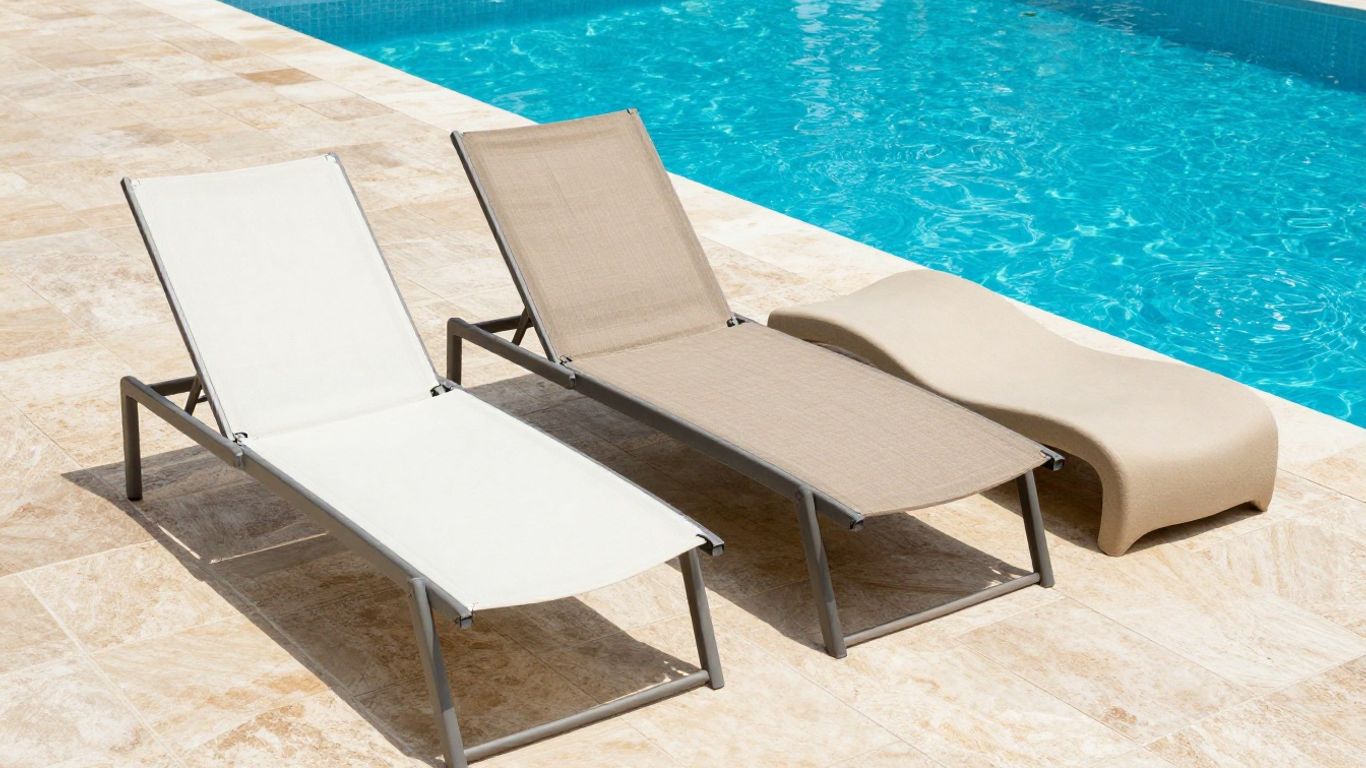
For a rigid poolside lounger, check the frame material and the finish, as well as any care instructions for preventing damage over time. Metal frames may differ in weight, finish, and maintenance needs; resin and other molded designs have their own construction and storage considerations. For in-pool products, verify that the seller explicitly describes the model as suitable for that use rather than inferring it from a photo. Poolboy is a New Zealand-designed brand of fabric pool floats and loungers made with solution-dyed Olefin fabric and a welded TPU core; those material details are specific to its products, not a general description of every lounger.
Choose fabrics and surfaces that handle sun and water
The surface is what you feel against your skin, but it also affects drying, cleaning, and storage. Look for the fabric type and any stated resistance to sun, pool water, or other outdoor conditions, then check whether the care instructions call for rinsing or full drying before storage. A table can help you compare the kinds of detail worth looking for without assuming every material performs the same way.
| Component | Details to check | Why it matters |
|---|---|---|
| Frame | Material, finish, and care instructions | Helps you judge suitability for your setting |
| Fabric or surface | Material and stated outdoor-use guidance | Gives clues about comfort and maintenance |
| Seams and joins | Construction details and close-up photos | Helps you assess how the parts are put together |
| Hardware | Type, placement, and replacement information | Shows what to inspect and maintain over time |
Use the listing to confirm the exact construction of the model you are considering. Poolboy’s products use solution-dyed Olefin over a welded TPU core, while other loungers may use different materials; compare stated care directions rather than treating all fabric or float surfaces as interchangeable.
Check weight limits, stability, and hardware quality
Look for a stated user capacity and check whether it applies to the whole product or a particular position. If a lounger has hinges, adjustable sections, valves, or connectors, the listing should make those parts clear enough for you to understand how they work. Reviews can add useful context about wobble or wear, but they do not replace the manufacturer’s specifications. When information about capacity or intended use is absent, ask the seller before buying rather than guessing.
Measure your space before ordering
A lounger that looks compact online can take up more room than expected once it is fully extended. Measure the area where you plan to use it, including any space needed to move around, get in and out of the pool, or reposition nearby furniture. If you are considering a floating design, think about the room it needs in the water as well as where it will sit when not in use. A few measurements now can save you the hassle of returning a bulky item.
Check deck dimensions and walking clearances
Measure the available deck area and compare it with the product’s full dimensions, not just its folded or packed size. Allow practical room to walk around the lounger and to reach pool steps, gates, and other seating. If you are ordering more than one, sketch their footprints together before checkout; two individual products can quickly crowd a narrow deck. Keep the measurements handy so you can check them against the listing without relying on scale in product photos.
Confirm pool ledge depth for in-pool models
For an in-pool lounger, compare the stated water-depth requirement with the actual depth of your ledge. Check whether the listing describes a specific ledge depth or identifies a product as suitable for a particular installation. Also consider how the lounger’s footprint fits the ledge, especially if there are steps, curves, or other features nearby. If the product page does not give enough information, contact the seller before ordering rather than assuming that a shallow area will work.
Plan for storage and seasonal protection
Before you buy, decide where the lounger will go when it is not in use. A rigid chaise may need more covered storage than a compact, movable float, while a fabric product may require drying before it is put away. This short pre-order check helps uncover practical questions that a product photo will not answer:
- Measure the available storage area, including doorway and shed access.
- Check whether the lounger can be stacked, folded, or otherwise made smaller.
- Find the care directions for drying and storing it between uses.
- Consider how you will move it from the pool to its storage spot.
These details help you compare the real footprint of ownership, not only the space the lounger occupies on a sunny afternoon. If storage is limited, favour a model whose packed or stored dimensions are clearly stated.
Assess comfort and useful features
Comfort is personal, so think about how long you tend to lounge and what kind of support you prefer. A reclining back, broad surface, armrests, or breathable fabric can change how a lounger feels, but each feature may add size, weight, or care needs. Compare the stated dimensions and features against your routine instead of treating a longer feature list as a better fit. If possible, try a similar shape in person before committing to a purchase online.
Look for adjustable positions and ergonomic support
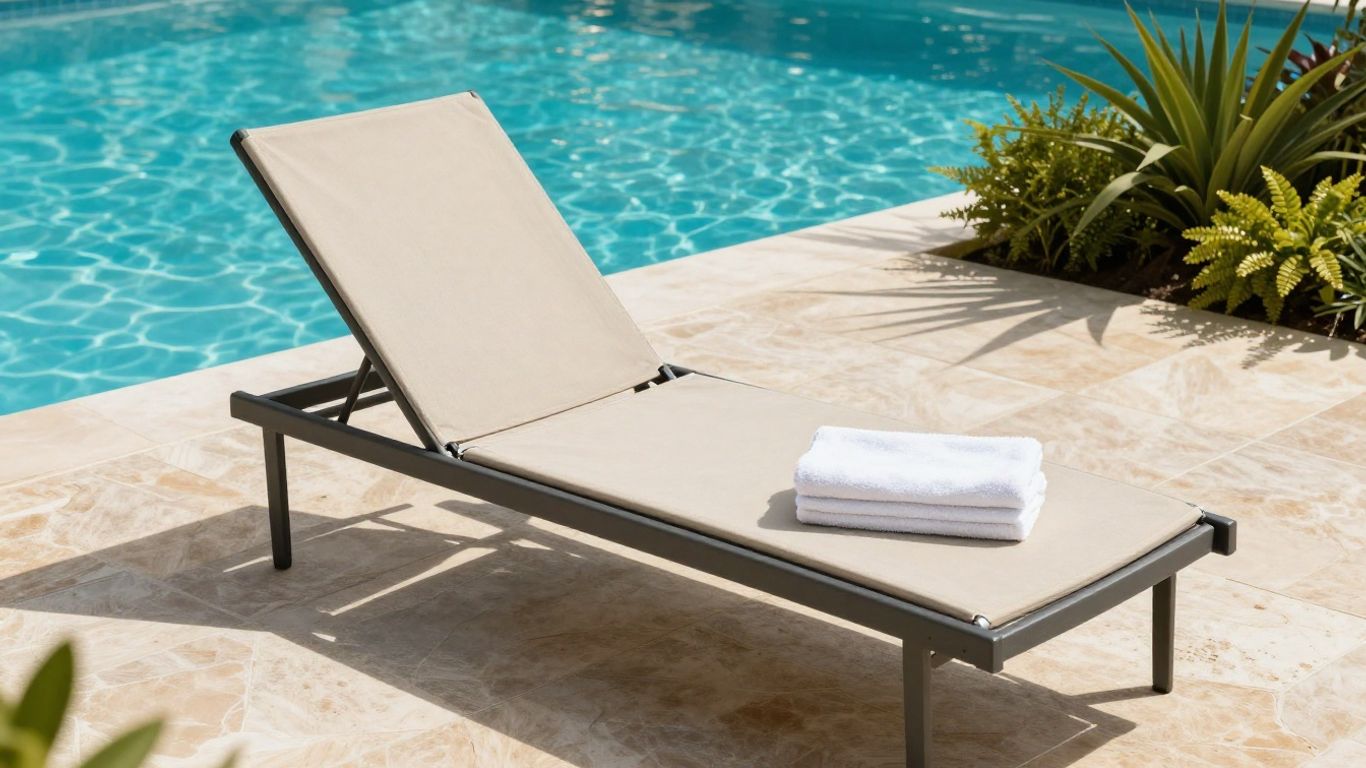
If you like to change positions, check how many settings are available and whether the listing explains how to adjust them. A fixed recline may be perfectly comfortable if it matches the way you relax, while a multi-position back can offer more choice on a deck chair. Pay attention to the support points described in the listing, such as the back and legs, and look for clear photos of the lounger in each position. For a floating design, a backrest or supportive shape may be more relevant than a reclining hinge.
Consider cushions, armrests, and breathable surfaces
Cushions can soften a rigid seat, but check whether they are included, removable, or intended to stay outdoors. Armrests may make it easier to sit down and stand up, though they can add width and affect storage. A breathable surface may feel different from a padded one, so consider how each option fits your preference for support and drying. The one-person Floata-Long from Poolboy is described as a fabric pool lounger with a cool-to-touch Olefin surface over a welded TPU core; compare those listed details with what matters most to you.
Weigh portability against sturdiness
A lighter lounger is easier to move, but you still want construction that suits the setting and intended use. Check the product weight and whether the listing explains how to carry, position, or store it. If you plan to move it often between the pool and deck, portability may matter more than a wide, stationary design. Balance that convenience against the support and stability you expect, and avoid assuming that lightness alone tells you how well a product is made.
Evaluate online sellers and product listings
A helpful listing makes it possible to picture the product in your own space and understand what arrives at your door. Look for complete dimensions, material details, capacity, included components, and clear information about assembly and care. If a detail important to your decision is missing, ask for clarification before paying. The point is not to find the longest product description; it is to find one that answers the practical questions you have.
Review specifications, product photos, and assembly details
Read the specifications alongside the photos, since images can make a small product look large or hide how it is assembled. Check whether the dimensions are for the lounger itself, any cushions, and its packed form. Photos from several angles can help you understand the surface and frame, while assembly details tell you whether tools or an extra pair of hands may be needed. Keep product questions in writing so you can refer back to the seller’s answer.
A video can help you see how an adjustable or floating model moves, but use it as a supplement to the written specifications. Confirm that the video shows the same model and version that appears in the listing before relying on it.
Compare warranties and return policies
Read the warranty terms to see what they cover, how long coverage lasts, and what steps you would take if there is a problem. Return policies matter for bulky purchases: check the return window, condition requirements, and who pays for return shipping. Also confirm whether the seller’s policy changes for products that have been used or assembled. Reviewing these terms before checkout gives you a clearer idea of the cost and effort involved if the lounger is not right for your space.
Check customer reviews for recurring issues
Look for patterns across reviews rather than treating one glowing or unhappy account as definitive. Repeated comments about missing parts, unclear assembly, unexpected dimensions, or difficult care may point to questions worth asking the seller. Recent reviews can be useful when a product has changed, but check whether they refer to the same model and size. Reviews are best used as a prompt for verification, not as a replacement for product specifications.
Plan for delivery, setup, and upkeep
A good choice still needs to arrive at a practical time and fit through the route to your pool area. Check shipping charges, delivery estimates, and the seller’s arrangements for larger parcels before placing the order. Then plan for any assembly, moving, drying, cleaning, or storage the product will need. These steps are easy to overlook when you are focused on choosing a shape, but they affect how convenient the lounger will be to use.
Confirm shipping costs, delivery access, and timelines
Check whether the listed price includes delivery and whether the seller ships to your area. Confirm the estimated dispatch and transit times, especially if you are ordering for a specific date. Measure gates, paths, stairs, and doorways along the route to the pool, and ask how large parcels are delivered if access is tight. The delivery method can be as important as the product dimensions when a lounger is bulky or heavy.
Find out whether assembly or special handling is required
Read the assembly instructions before ordering, if they are available, and check which parts or tools are included. Ask whether the product needs two people to move or set up, and whether any components need to be inflated or fitted before use. For a heavier deck model, plan how you will get it from the delivery point to the pool. A little preparation makes setup less of a surprise once the box arrives.
Follow care instructions to extend the lounger’s lifespan
Care depends on the product’s actual materials and construction, so follow the seller’s instructions rather than applying a one-size-fits-all routine. The directions may specify how to rinse, clean, dry, and store the lounger between uses. Inspect moving parts, seams, and hardware periodically, and deal with minor dirt or wear in the way the manufacturer recommends. Drying and storing a product as directed is a simple habit that can help keep it ready for the next pool day.
Conclusion
When you buy pool loungers online, choose for the space and routine you have, not just the image you like. Compare materials and dimensions, check the seller’s terms, and make a plan for delivery and care before you order. A few careful checks can make the lounger a more comfortable and practical part of your pool area.
Frequently Asked Questions
What should I measure before buying a pool lounger?
Measure the space where you will use it, the full product dimensions, and the route it will take from delivery to the pool. Leave room for walking and access to steps or gates.
Are in-pool loungers suitable for every pool?
No. Check the product’s intended use and any stated ledge depth or installation requirements, then compare them with your pool’s surface and dimensions.
What is the difference between a poolside lounger and a floating lounger?
A poolside lounger sits on the deck, while a floating lounger is used on the water. Their comfort, movement, storage, and space requirements differ.
Which materials should I look for in a pool lounger?
There is no single best material for every setting. Compare the listed frame and surface materials, outdoor-use guidance, care requirements, and suitability for where you plan to use it.
Do I need an adjustable pool lounger?
Only if changing positions matters to you. A fixed design may suit a preferred recline, while adjustable models offer more options but can include additional parts to inspect and maintain.
What should I check in an online return policy?
Review the return window, condition requirements, process, and responsibility for return shipping. For bulky items, those terms can affect the time and cost of a return.
How should I care for a pool lounger?
Follow the care instructions for the specific product. They may cover rinsing, cleaning, drying, storage, and periodic inspection of seams or hardware.