


Fabric pool floats: how to choose, use, and care for them
Key Takeaways
Fabric pool floats combine a textile surface with different kinds of inner support, so their feel and care needs depend on how they are built. Choose by how you want to lounge, where you’ll use the float, and how much storage space you have.
- Check what provides buoyancy: an inflatable bladder, foam, or a different support system.
- Match the shape to whether you want to lie flat, sit upright, or stay partly in the water.
- Compare dimensions and weight capacity with your own needs and available pool space.
- Rinse and dry the float after use, and follow its care label before washing.
- Store it clean and fully dry, away from prolonged sun exposure.
What fabric pool floats are and how they’re made
Fabric pool floats use a textile outer surface, but that description alone does not tell you how they stay afloat. Some have an inflatable inner chamber, while others rely on foam or a shaped support system. Those differences affect how a float feels, how it packs away, and what you need to do before storing it. Understanding the layers is a useful first step before comparing styles.
Common fabrics and what they’re designed to do
The outer fabric is the part you touch, so its texture, breathability, and sun exposure matter in everyday use. Some floats use solution-dyed Olefin, a fabric in which colour is embedded in the fibre; others use different outdoor textiles. Construction and care instructions vary by product, so treat material names as a starting point rather than a complete durability guarantee.
A fabric surface may feel less slick than a bare inflatable surface, but that is not a promise that every textile behaves the same way. Check the label for cleaning advice and ask how the fabric is intended to handle water, sunlight, and regular use. The details matter more than a broad label such as “outdoor fabric.”
How the cover and inner support work together
The cover and buoyant core have separate jobs. Fabric forms the surface against your skin, while the inner support determines how the float holds its shape and supports your body. On an inflatable design, check how the chamber is accessed and whether the valve is positioned where it will not press uncomfortably against you. On foam-filled designs, consider whether the float can be folded or stored without putting pressure on the material.
It can help to compare the broad construction types before getting attached to a particular color or shape. These distinctions are general: individual products may combine features or use a different construction, so confirm the maker’s specifications.
| Construction | What supports the float | What to check |
|---|---|---|
| Fabric-covered inflatable | An air-filled inner chamber | Valve access, inflation needs, and seam construction |
| Foam-filled | Buoyant foam inside or beneath the cover | Thickness, flexibility, and storage footprint |
| Sling or hammock style | Fabric or mesh held between buoyant sections | Body position, entry, and how much of you sits in the water |
The outer fabric does not determine buoyancy on its own. Look at the whole build, including how the cover meets the support and what the care label says about each material.
Fabric floats compared with vinyl inflatables
A fabric float and a smooth-surfaced inflatable can differ in feel, construction, and maintenance. Fabric may be more comfortable against bare skin for some people, while a conventional inflatable may be easier to wipe down; actual products vary. Poolboy makes fabric floats with solution-dyed Olefin over a welded TPU core, a construction that is distinct from a bare PVC surface.
When comparing product descriptions, focus on material and construction rather than relying on broad promises. Some designs in the market are also airless float designs, so confirm whether the float you are considering uses an inflatable chamber at all. Knowing the construction helps you understand what to inflate, clean, and inspect.
What “quick-drying” and “fade-resistant” really mean
These terms describe performance claims, not a reason to skip care. Drying time can depend on the fabric, the float’s thickness, airflow, humidity, and whether water is trapped in folds or seams. Likewise, fade resistance does not mean a float should be left in direct sun indefinitely.
Read the product details to learn what material a claim applies to, then use the float in a way that supports its lifespan. Rinsing after swimming and letting the float dry fully are sensible habits regardless of the fabric’s stated properties.
Types of fabric pool floats
Fabric pool floats come in several broad forms, from loungers that keep you close to the water to larger designs meant for relaxed floating. Their names can sound similar even when the support and body position differ. Think first about whether you want to lie down, sit upright, or be partly immersed. The right category is the one that fits your preferred position and the space you have.
Fabric-covered inflatable loungers
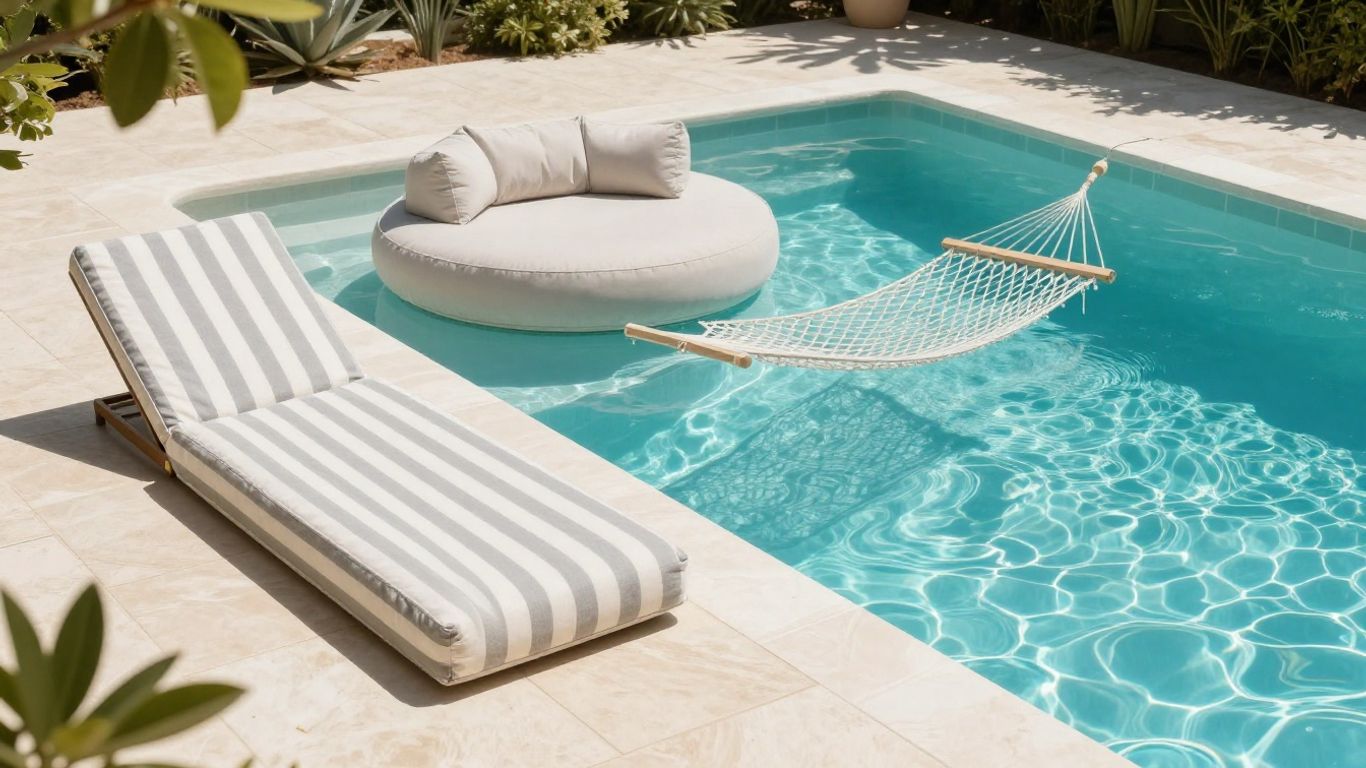
A fabric-covered inflatable lounger pairs a textile outer surface with an air-filled support. It can offer a familiar reclined shape while giving you fabric where your body rests. Check whether it arrives inflated or requires assembly, and find out how the cover and inner chamber connect before you buy.
Poolboy offers three designs for different ways to lounge. The Floata-Long is a single-person lounger designed for lying flat; its listed dimensions are 160 x 88 x 45 cm. Those measurements are useful when you’re checking whether it will fit your pool and storage area.
Foam-filled floating mats and loungers
Foam-filled floats do not rely on an air chamber for their buoyancy, though their exact structure varies. A broader mat gives you room to stretch out, while a shaped lounger may provide more defined support. Consider how the float will feel when wet and whether its size makes it awkward to move or store.
Because foam construction can be difficult to judge from a photograph, check the product description for thickness and care guidance. Also look for directions about drying and storage; water can remain in layered or covered materials if they are put away too soon.
Sling-style floats for upright lounging
Sling-style designs let you sit lower in the water, often with buoyant sections supporting either end of a fabric or mesh center. This can suit a warm day when you want to stay partly immersed rather than lie fully above the surface. Check how the sling holds your body and whether getting on and off looks manageable for you.
The Poolboy Sinka-Bit is a floating hammock with a quick-drying mesh center and Olefin bolsters. That combination is designed for lounging half in and half out of the water. A sling position is not the same as a full-length lounger, so picture how you want to spend your time before choosing.
Oversized floats for sharing
A wide float can seem inviting, but “oversized” does not automatically mean it is designed for multiple people. Check the stated capacity, dimensions, and intended use rather than guessing from a product photo. More surface area may also mean more effort to carry, dry, and store.
If you want to share a float, consider how people will get on and off and whether the pool has enough room for it to move freely. A float that is comfortable for one person may feel crowded with two, even if it looks spacious on a screen.
How to choose the right float
Choosing among fabric pool floats is easier when you begin with how you actually spend time in the water. A lounger for reading, a sling for cooling off, and an upright seat answer different needs. Then check the less glamorous details: dimensions, weight capacity, assembly, and care. Those are often what decide whether a float fits into your routine.
Match the float to your preferred way to relax
Think about your usual position before comparing colors or patterns. If you like stretching out, look for a long, supportive surface; if you prefer sitting up, consider a design with a defined seat or bolsters. A hammock-style float suits a different kind of lounging again, with the center closer to the water.
Poolboy’s Floata-Round is a round design with a recessed seat and bolster ring, made for upright lounging. Its 140 cm width gives you a specific measurement to compare with your pool and storage space. Use the same practical approach with any float: check the shape and measurements against how you plan to use it.
Check dimensions, weight capacity, and fit
A float should suit both your body and your surroundings. Compare its full dimensions with the pool’s usable area, and check the manufacturer’s weight capacity rather than estimating it. If you plan to move the float between the pool and a storage area, consider whether you can carry it comfortably when wet.
Look beyond the length alone. Width, thickness, raised sections, and the position of a seat can change how a float feels and how much room it occupies. When product measurements are not clear, ask the seller before purchasing.
Consider fabric feel, breathability, and sun exposure
If you can, handle the fabric before buying or ask whether swatches are available. Consider how it feels against bare skin, whether the surface is breathable, and how much time the float will spend in direct sun. A fabric’s color and finish may also affect your preference, but do not treat appearance as a substitute for material details.
Solution-dyed Olefin is used on Poolboy floats, with colour embedded in the fibre. That documented construction detail can help you understand what the material is, but care still matters: shade and dry the float between uses rather than leaving it exposed all day.
Compare portability, inflation, and assembly needs
Some fabric floats need inflation, while others may use a different support system. Confirm whether a pump is included, how the float packs for transport, and whether you need to assemble or remove a cover. A product that is easy to set up but bulky to store may not suit a small shed or apartment balcony.
Before deciding, run through a few practical checks that are easy to overlook in a product photo:
- Measure the float’s footprint against your pool and storage area.
- Check whether inflation or assembly is required and what equipment is included.
- Consider how you will carry and dry the float after swimming.
- Confirm the stated weight capacity and any use limitations.
These checks narrow the choice without turning the purchase into a research project. If a detail affects safety, fit, or upkeep, look for it in the manufacturer’s instructions rather than assuming.
Evaluate price against construction and warranty
Price makes more sense when you compare what the float is made of, how it is constructed, and what support comes with it. Look for clear information about seams, the inner support, care, and warranty terms. A longer list of features is not automatically better if those features do not match how you will use the float.
For a specific product, read the warranty conditions carefully and note what is excluded. If you are comparing options, a fabric float range can give you a useful sense of how different shapes and construction choices are presented, but check each product’s own specifications before deciding.
Comfort and performance in the water
Comfort depends on more than the softness of the fabric. Shape, buoyancy, water conditions, and the way you get onto the float all affect how settled you feel. A float may sit differently in a calm pool than it does when people are moving around nearby. Consider the setting as well as the product before you head in.
Choose a shape that supports your body
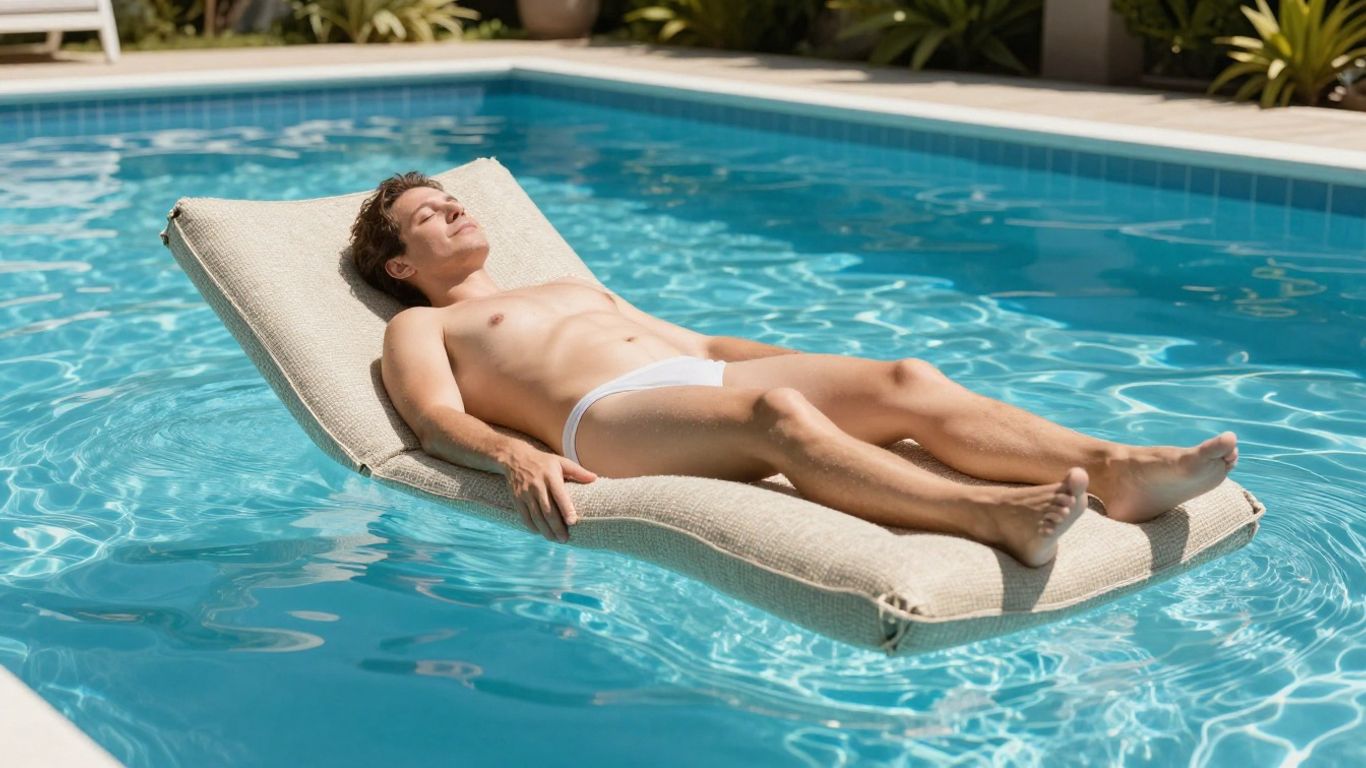
The best shape is the one that supports the position you want without making you work to stay comfortable. A flat lounger gives you room to recline, while a raised or recessed seat puts you more upright. A hammock-style design holds your body differently and leaves part of you closer to the water.
Look for support where you expect to need it, such as under your back or legs. If possible, try the float in person or read its measurements closely; a product photo can make a seat or bolster look larger than it feels.
Understand stability and how the float sits in the water
Stability is affected by shape, buoyancy, your position, and movement around you. A float that sits low or has a sling center will feel different from a broad, fully supported lounger. Small shifts in your weight can also change how it moves, so get on and off slowly and avoid leaning suddenly over an edge.
A float is not a fixed seat. Give yourself room to move, and do not assume that a wider design is automatically more stable in every situation. Follow any use guidance supplied with the product.
Account for pool conditions and intended use
Consider whether you will use the float in a pool, on a tanning ledge, or somewhere else. Water depth, wind, nearby swimmers, and the pool’s layout affect how comfortably you can use it. Check the manufacturer’s stated intended use, and do not take a pool float into conditions it was not designed for.
Poolboy describes its Floata-Long as suitable for use on or beside the water, but that does not replace checking the specific instructions for the place you plan to use it. Keep the float clear of steps and crowded areas, and bring it out of the pool when it is not in use.
Use fabric floats responsibly around children
A pool float is not a safety device, and it does not replace close, active adult supervision. Children can slip, tip, or move away from a float unexpectedly, even in shallow water. Follow the float’s age and weight guidance, and keep children within arm’s reach when they are in or near the water.
Set clear expectations before play begins. Do not let children treat a lounge float as a substitute for swimming ability or required flotation equipment, and remove the float from the water if it is making supervision harder.
Cleaning and care
A little care after swimming can make storage easier and help you notice wear before it becomes a bigger problem. Pool water, salt, sunscreen, and body oils can remain on the surface after a session. Start with the manufacturer’s care instructions, since fabric covers and inner supports may need different handling. A simple, consistent routine is usually better than an occasional deep clean.
Rinse away chlorine, salt, and sunscreen
Rinse the float with fresh water after use, especially if it has been in salt water or a chlorinated pool. Pay attention to folds, seams, and areas where sunscreen may have transferred. Let excess water drain before you move the float indoors or into storage.
Avoid assuming that a quick splash is enough if the float has visible residue. Poolboy’s care guidance also recommends rinsing with fresh water to remove salt and chlorine; the practical aim is to clear residue before it dries on the surface.
Follow the label for washing and spot cleaning
Check the care label before using detergent, a brush, or a washing machine. Some covers may be removable, while others are intended to stay attached; do not unzip or detach parts unless the maker says to. For a small mark, use the cleaning method the manufacturer recommends and test it discreetly if appropriate.
A general guide to pool float care and storage can help you build a routine, but the product’s own instructions should take priority. Avoid strong cleaners unless the maker specifically approves them, since they may affect the fabric or other components.
Dry the float fully before putting it away
Drying matters as much as rinsing. Let the float drain and air-dry in a ventilated place, turning or repositioning it so damp areas are not trapped underneath. Pay extra attention to seams and any fabric layered over an inner chamber.
Do not pack a float away while it still feels damp. Even a clean float can develop musty odors if it is stored before it has dried fully, so allow more time when the weather is humid or airflow is limited.
Check seams, zippers, and inflation components
As you clean and dry the float, look over the seams, zippers, valves, and any visible inflation components. Check for loose stitching, damage, or signs that the float is not holding its shape as expected. If something seems wrong, stop using it until you have checked the manufacturer’s guidance.
Repairs depend on the construction. Do not apply a patch or alter a seam without confirming that the repair method suits the material and inner support. Keep small repair parts with the float if they are supplied, and follow the maker’s instructions.
Storage and long-term maintenance
Storage is part of regular care, not an afterthought at the end of summer. A float that is clean and dry is easier to store and less likely to develop unpleasant odors. Choose a spot that stays dry and avoids prolonged exposure to heat and sunlight. Before packing it away for the season, check the product instructions for whether it should be deflated or kept in another specific form.
Store floats in a cool, dry place
Put the float away only after it is fully dry. Choose a cool, dry location where it will not be crushed by heavy objects or exposed to standing water. If the design is inflatable, follow the maker’s instructions about deflation and packing rather than forcing it into a smaller space.
A dedicated storage bag or shelf can keep the float from being scraped or compressed. Avoid storing it against sharp edges, and make sure any valves or removable parts are clean and kept with the product.
Protect fabric from prolonged sun exposure
Outdoor materials can still benefit from a break from direct sun when you are not using them. Bring the float out of the pool or move it into shade between sessions, then store it away from windows or other places where sunlight reaches it for long periods. Follow any specific care directions that come with the product.
“Fade-resistant” does not mean “leave it outside forever.” Shade and sensible storage are simple ways to reduce avoidable exposure and keep the fabric in better condition.
Prevent mildew and odors between uses
The main routine is straightforward: rinse, drain, dry, and store. If the float will be unused for a while, check it again before packing it away, especially around seams, folds, and covers that may hold moisture. A closed, damp container is not a good substitute for dry storage.
If you notice an odor, let the float air out and consult the manufacturer’s cleaning directions before using a stronger treatment. Avoid masking a smell without finding out whether moisture or residue is the cause.
Repair or replace worn parts when needed
Inspect the float at the start of the season and from time to time during regular use. Follow the maker’s advice if a valve, seam, cover, or support component is damaged. Some small issues may be repairable, but a repair is only useful if it is suitable for the materials and does not compromise safe use.
Keep the warranty and care information somewhere you can find it. If the damage affects the float’s shape or ability to support you, take it out of use until you have a clear repair or replacement plan.
Conclusion
The best fabric pool float is the one that suits your preferred position, fits your pool and storage space, and has construction details you understand. Check the materials and instructions before buying, then rinse, dry, and store the float carefully after use. That steady routine helps you enjoy it without making pool care complicated.
Frequently Asked Questions
What is a fabric pool float?
It is a float with a textile outer surface, paired with an inner support such as an inflatable chamber, foam, or a sling-style structure. The exact construction varies by product.
Are fabric pool floats inflatable?
Some are, while others use foam or a different support system. Check the product description to see how a particular float provides buoyancy.
How do you choose the right size?
Compare the float’s dimensions and stated weight capacity with your body, pool area, and storage space. Consider how much room you need to move around it.
Can you leave a fabric float in the sun?
Follow the maker’s care instructions, but avoid leaving any float in prolonged direct sun when it is not being used. Shade and dry storage are sensible habits.
How should you clean a fabric pool float?
Rinse it with fresh water after use, then follow the label for spot cleaning or washing. Avoid cleaners or methods the manufacturer has not approved.
How do you stop a pool float from smelling musty?
Let it dry completely before storing it, including around seams and folds. Keep it in a cool, dry place with enough ventilation.
Are pool floats safe for children?
A pool float is not a substitute for active adult supervision or appropriate flotation equipment. Follow the product’s age and weight guidance and keep children closely supervised in and around water.