


10 best pool floats for comfort: supportive styles for relaxing
Key Takeaways
Comfort depends on how you like to lounge, how much support you want, and how a float fits your pool routine. Use the style that makes it easiest to settle in and stay comfortable.
- Choose a backrest or chaise shape when you want upper-body support.
- Mesh-center hammocks keep part of your body in the water.
- Full-length loungers offer room to lie flat, while saddle styles suit upright floating.
- Compare materials, seams, and storage needs along with the shape.
- Headrests, footrests, and canopies add features, but comfort starts with a good fit.
1. Inflatable loungers with backrests
An inflatable lounger with a backrest gives you a place to recline without needing to hold yourself upright the whole time. It can be a good fit if you want to read, watch the pool, or simply rest with your shoulders raised. Before choosing one, consider how much support you want behind your back and whether you prefer a wide, open surface or a more defined seat.
Different shapes balance support and freedom of movement in different ways. This quick comparison can help you focus on the feature that matters most to you.
| Float style | What it supports | A useful question |
|---|---|---|
| Backrest lounger | Raised upper body | Does the back feel supportive? |
| Chaise float | Reclined, lengthwise lounging | Is there enough room to stretch out? |
| Mesh hammock | Partly submerged lounging | Do you want to stay close to the water? |
| Foam float | A simple resting surface | Is it easy to store between uses? |
The table is a starting point, not a ranking: the most comfortable design is the one that suits your preferred posture. If you tend to shift around, look for a shape that lets you reposition without feeling perched on a narrow area.
Also think about where you will keep the float when it is not in use. A compact inflatable may be easier to put away, while a larger lounge shape can take up more space. A few minutes spent checking the footprint and the intended posture can save you from choosing a float that looks comfortable but does not suit your routine.
2. Pool chaise floats with adjustable recline
A chaise-style float is shaped for a longer, reclined position, and an adjustable back can give you more than one way to settle in. That flexibility is useful when you want to sit up for a while and then lean back without changing floats. Look closely at how the recline is adjusted and whether the supporting section feels stable in the position you expect to use most.
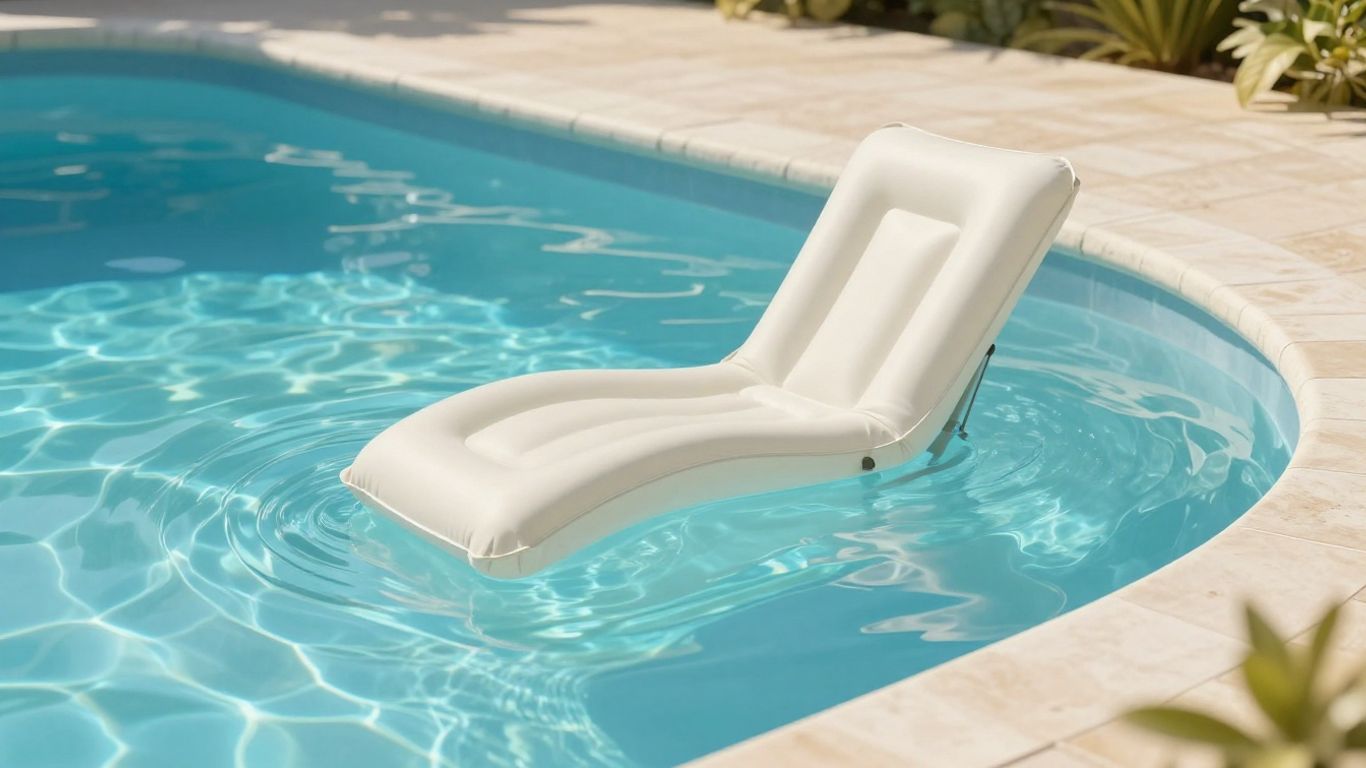
The word “adjustable” can mean different things from one design to another, so check the product details rather than assuming every backrest offers the same range. If you like to stretch your legs out, pay attention to the length of the usable lounging area as well as the back support.
A chaise float is not automatically the right pick just because it looks like a poolside chair. Consider how easily you can get on and off, whether you prefer to float freely or stay mostly in one position, and how the float will be stored. Those practical details matter more than an extra setting you may rarely use.
3. Pool hammocks with mesh centers
A pool hammock with a mesh center supports you at the ends while letting the middle of your body sit closer to the water. That can feel more refreshing than lying entirely above the surface, especially on a warm day. The bolsters or end sections shape how you sit, so consider whether you want a more upright posture or a looser, hammock-like rest.
The Sinka-Bit is a floating hammock with a quick-drying mesh center and solution-dyed Olefin bolsters. It lets you float half in and half out of the water, a useful distinction if you want to stay cool while still having support at either end.
Mesh hammocks are worth considering if a full-body inflatable feels too enclosing. Check how the hammock is sized for your body and how the end supports are arranged, then think about whether that partly submerged position is the kind of relaxation you actually enjoy. A simple change in posture can make a float feel entirely different.
4. Full-body floating loungers
Full-body floating loungers give you space to lie down rather than sit upright in a small seat. The extra surface can be welcome if you want to stretch out, read, or rest without keeping your knees bent. When comparing options, consider both the length of the lounging area and how much space the full float takes up in your pool.
For a full-length example, the Floata-Long is a single-person fabric pool lounger measuring 160 cm long, designed to give one person room to lie flat. Its solution-dyed Olefin fabric is woven over a welded TPU core, a specific material construction to check if you are comparing fabric-covered loungers.
A long surface does not guarantee that every position will feel comfortable, so think about your height and preferred way of resting. You might prefer a flatter shape, or you may want some lift under your upper body. Compare the design with how you actually spend time in the water, rather than choosing by size alone.
5. Saddle-style pool floats
Saddle-style floats are designed for an upright, straddling position rather than a reclined one. They can suit you if you like to keep your head and shoulders above the water and move around casually. Since the shape places your weight differently from a lounger, consider how secure and comfortable the seat feels before settling on this style.
This category is less about stretching out and more about a relaxed, supported posture. Check the width of the seat and whether the float leaves you comfortable enough to stay in that position. If you are choosing for different people to share, remember that a shape that suits one person may not fit another in the same way.
If you are still weighing up silhouettes, this overview of pool float styles can help you think about the range of shapes before focusing on particular features. For a saddle float, the key question is simple: do you enjoy sitting astride a float, or would you rather lean back and let the surface support more of your body?
6. Fabric-covered inflatable floats
Fabric-covered inflatables combine an inflatable core with a textile outer surface. That construction may appeal if you prefer a fabric feel to a bare inflatable surface, but the cover and inner bladder still need to be considered together. Look at the material description, how the seams are made, and the care instructions before comparing one float with another.
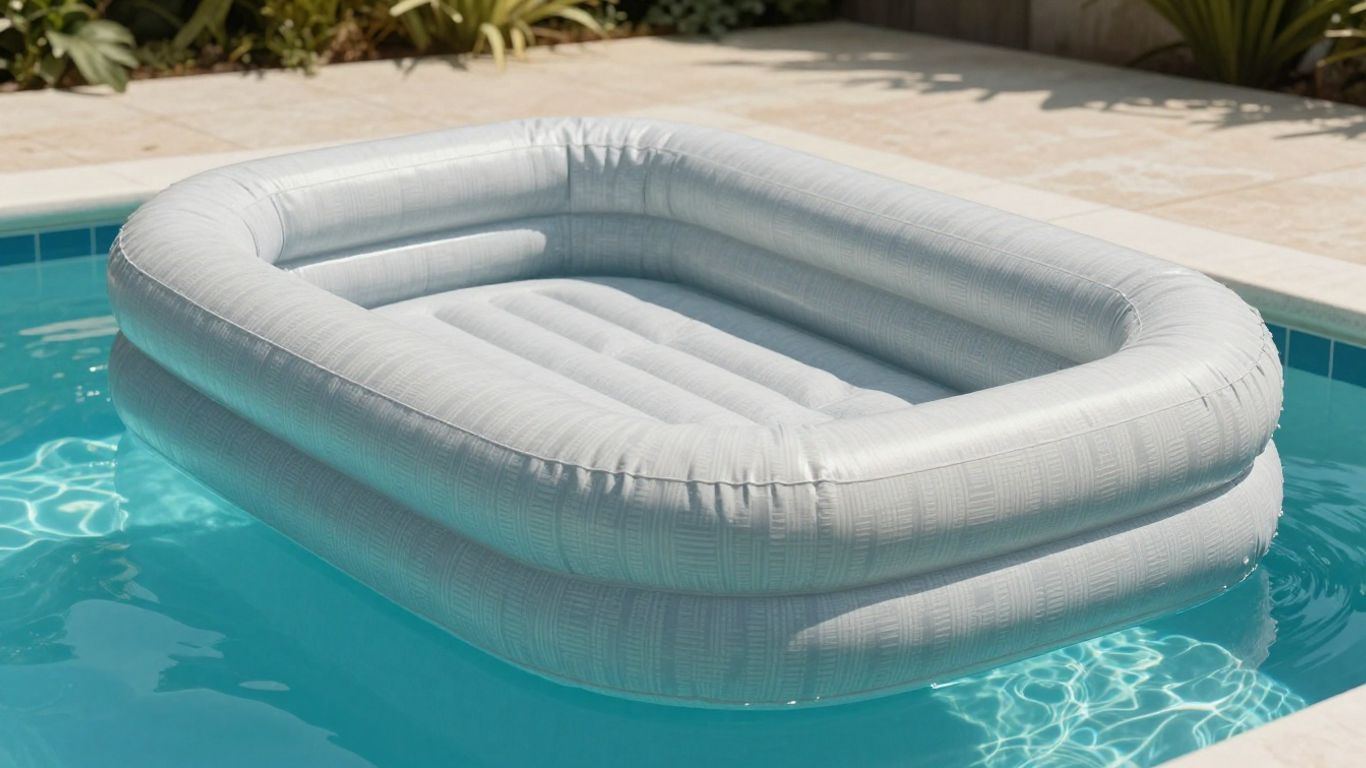
The Floata-Round pairs solution-dyed Olefin fabric with a welded TPU core and has a recessed seat supported by a bolster ring. Its round design is made for upright sitting, so it is a better example of a fabric-covered seat than a full-length lounger.
A textile cover does not remove the need to care for an inflatable. Rinsing and drying a float before storing it can help keep it in good condition; follow the specific care directions for the material and construction. You can also compare how much room a covered float needs to dry and where you will keep it between pool days.
7. Foam pool floats
Foam floats are a simple option if you want to avoid inflating and deflating a float. Their shapes range from basic, narrow supports to wider surfaces designed for lounging, so check the actual dimensions instead of relying on the broad category name. The feel can also vary with the shape and thickness of the foam.
A foam float may be easy to bring into the pool, but it can take up more storage space than an inflatable that packs down. Think about where it will live between uses and whether you have room to keep it out of direct sun when it is not needed. Storage is not glamorous, but it is part of choosing a float you will use often.
If you want a broad surface, consider how much of your body it supports and whether you can comfortably change positions. If you mainly want something to lean against or hold while floating, a simpler shape may be enough. Matching the float to the way you plan to use it is more useful than choosing the largest option by default.
8. Oversized floats for two
Oversized floats can offer room for two people to lounge together, but their size also changes how they fit into a pool and how easy they are to handle. Before buying, check the stated capacity and dimensions, then compare them with the open water space you have. Two people also need to be comfortable with how the float responds as weight shifts.
Consider whether you want one shared surface or a float with distinct seating areas. A broad open shape gives you room to move, while defined positions may help each person find a place to settle. Think about how you will get onto the float and whether both people can stay comfortable without constantly rearranging themselves.
A large float can be fun to share, but it is not always the most relaxing choice for a quiet pool. If you value personal space or want to move freely, two smaller floats may suit you better. Make the decision around your usual pool routine, not only the novelty of having extra room.
9. Pool floats with headrests and footrests
Headrests and footrests can make a float feel more tailored to your preferred position, especially if you like your body supported at both ends. Their usefulness depends on where they sit in relation to your height and how you plan to recline. Check the float's dimensions and, where possible, try the position before committing to it.
A few practical checks can help you decide whether these additions will improve your time in the water:
- See whether the headrest supports your neck without pushing your chin forward.
- Check that the footrest gives your legs a comfortable place to rest.
- Consider whether you can change positions without losing support.
- Look for clear care and storage instructions for the complete float.
These details are most useful when they match your body and your habits. If a headrest or footrest makes it harder to shift around, it may be less comfortable than a simpler open surface. Choose features that support the position you actually enjoy, rather than treating a longer feature list as a measure of comfort.
10. Canopy floats for shaded lounging
A canopy float adds overhead shade to a lounging setup, which may appeal if you want some shelter while spending time in the pool. Before choosing one, consider the size of the canopy, how it attaches, and whether the full float fits your pool. A canopy also changes the overall shape and handling of the float, so look at the complete design rather than focusing on the shade alone.
Think about when you will use it and how much open space you have around the pool. A large overhead feature might suit a leisurely afternoon, but it can be inconvenient if you want to move the float around often. Check the maker's setup and use instructions, and do not assume the canopy replaces other sensible sun protection.
For any style, comfort is a mix of support, fit, materials, and how easily the float works with your space. The best pool floats for comfort are not necessarily the ones with the most features; they are the ones that let you relax in the position you like and suit the way you use your pool.
Conclusion
Start with the posture you find most relaxing, then compare the float’s shape, size, materials, and storage needs. Whether you prefer a supported recline, a mesh hammock, or a simple foam surface, choosing for your real pool routine is the surest way to find a float you will enjoy using.
Frequently Asked Questions
What type of pool float is most comfortable?
It depends on how you like to rest. A backrest or chaise can support a reclined position, while a mesh hammock keeps part of your body closer to the water.
Are pool floats with backrests comfortable for reading?
They can be, if the backrest supports your preferred sitting angle and the lounging area feels stable. Check the shape and dimensions before choosing one for longer periods of reading.
What is the benefit of a mesh-center pool hammock?
A mesh center lets part of your body sit closer to the water while the ends support you. This can feel cooler than lying entirely above the surface.
How do you choose the right size pool float?
Compare the float’s dimensions with your height, preferred posture, and available pool space. For a shared float, also check its stated capacity and how much room each person will have.
Are fabric-covered pool floats different from bare inflatables?
Fabric-covered floats have a textile outer surface over an inflatable core. Check the listed materials and care instructions, since construction and maintenance can vary.
Do foam pool floats need to be inflated?
No. Foam floats do not need inflating, though their size and shape can make them less compact to store than some inflatables.
How should you store a pool float between uses?
Follow the maker’s care instructions. In general, rinsing off pool water, allowing the float to dry, and storing it in a suitable place can help keep it in good condition.